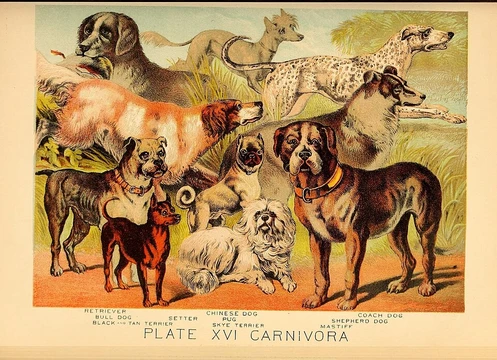
Beagle
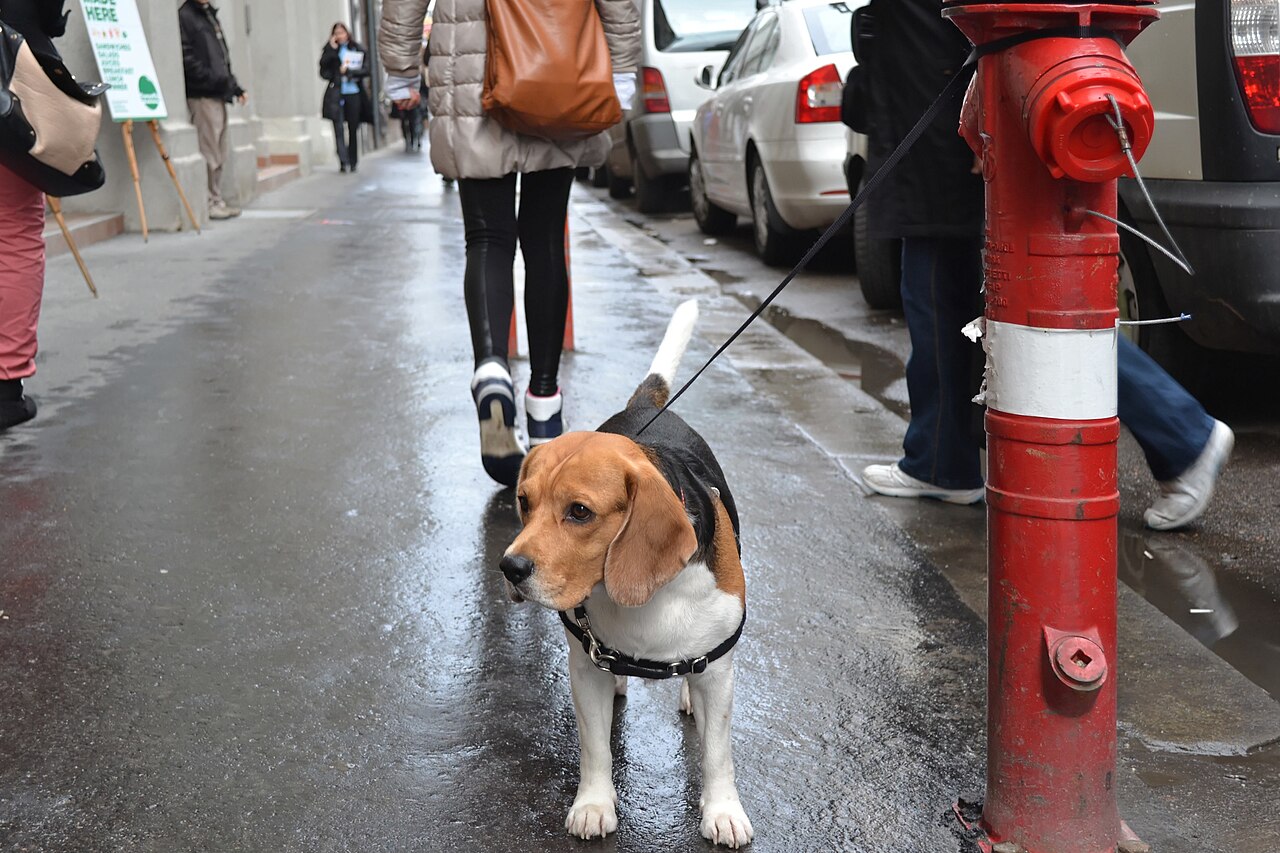
British scent hound bred for hunting, now a companion and detection dog.

Slyronit · CC BY-SA 4.0
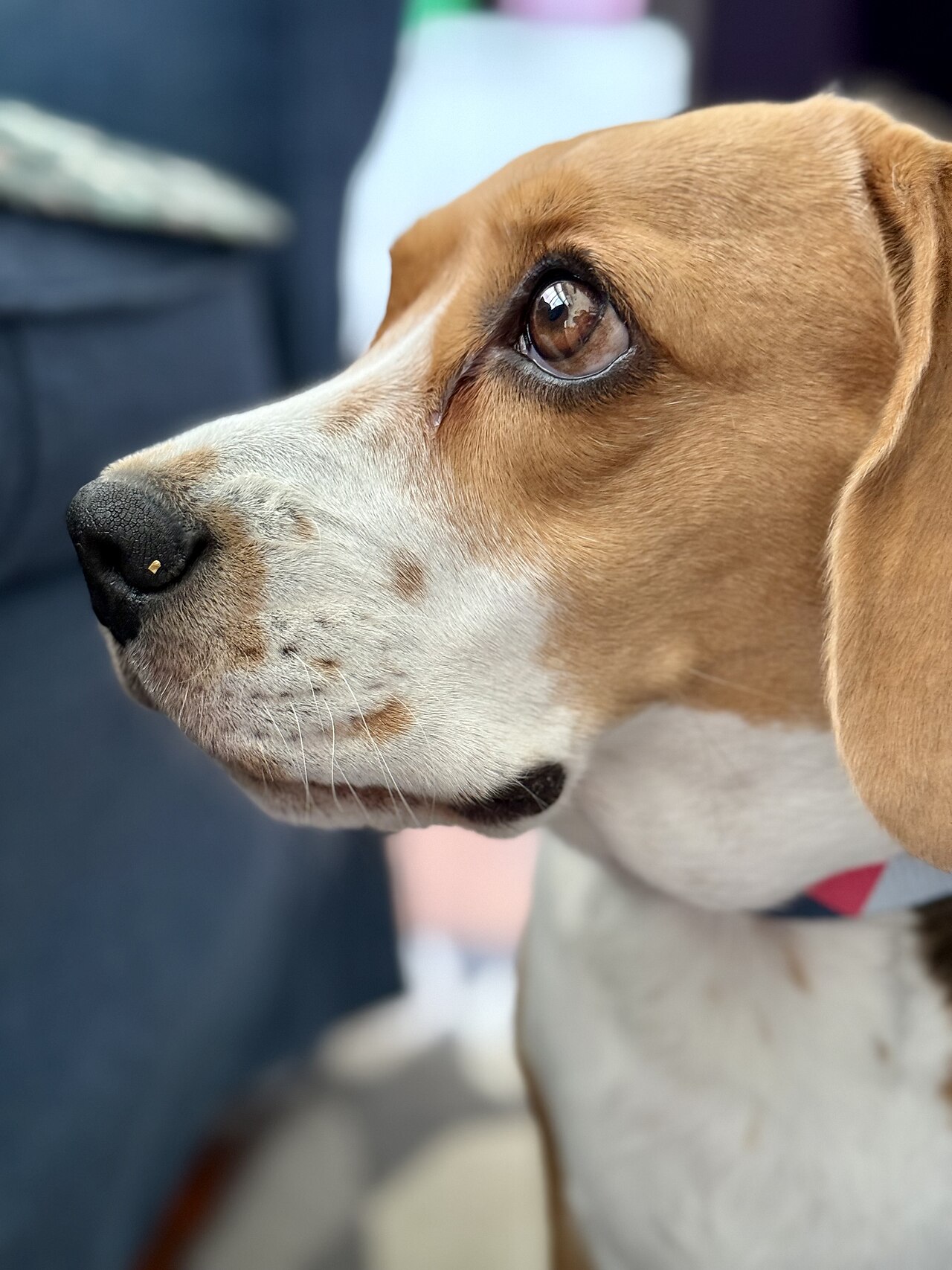
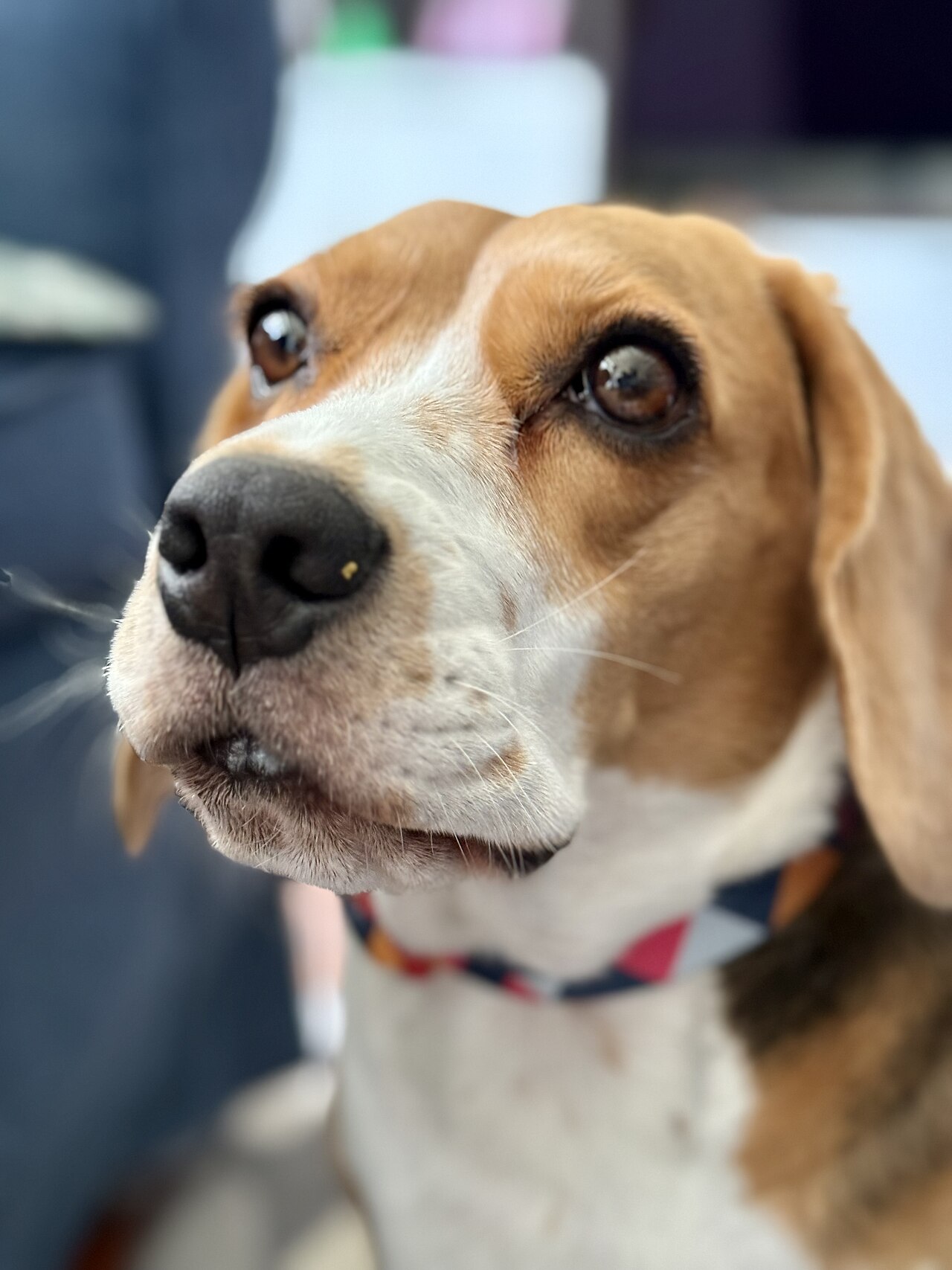
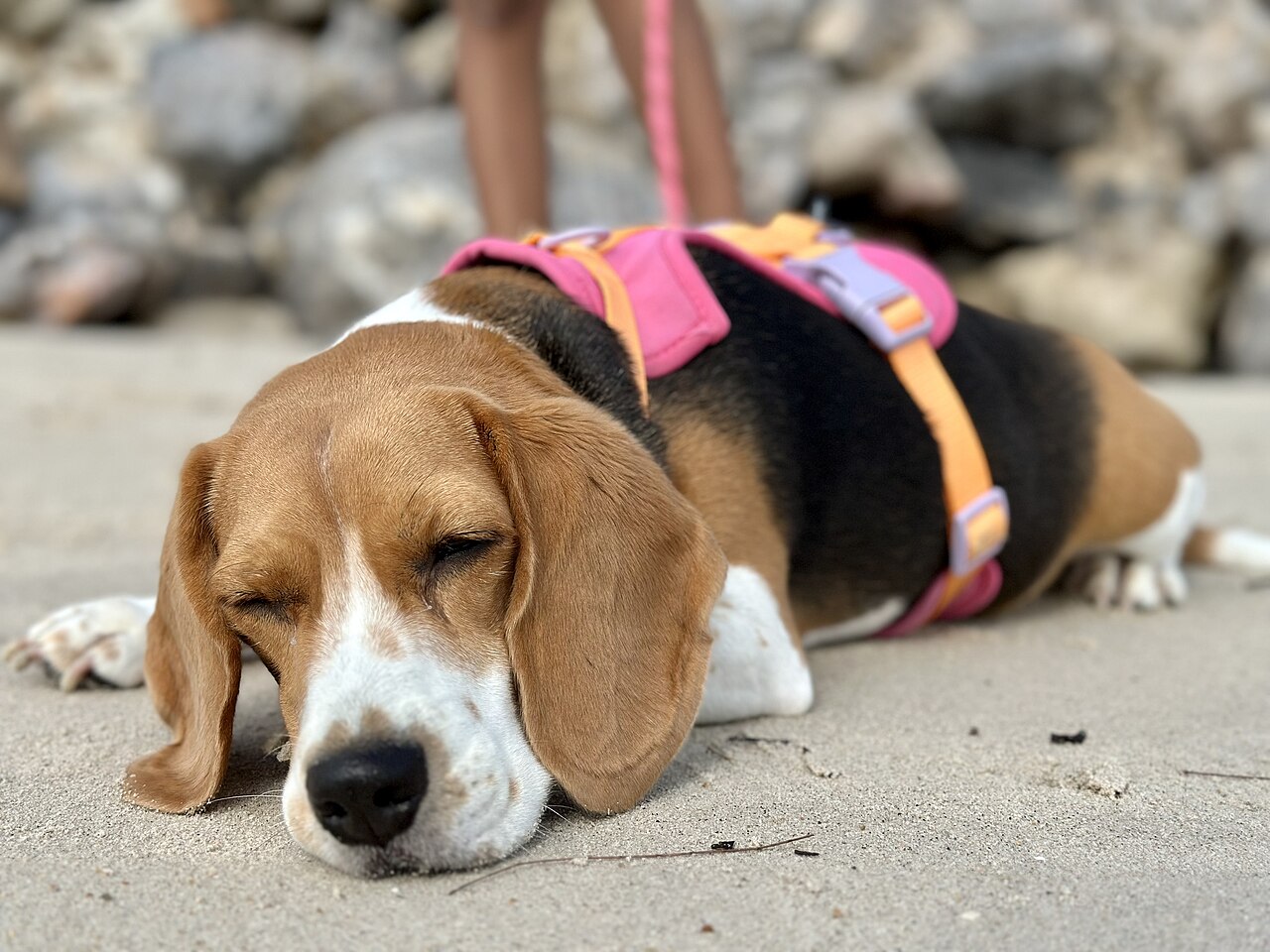
The Beagle is a British breed of scent hound, similar in appearance to the much larger foxhound. It was bred primarily for hunting rabbit or hare, known as beagling. Its sense of smell and tracking instincts make it suitable for use as a detection dog for prohibited agricultural imports and foodstuffs in quarantine. It is commonly kept as a companion dog. The modern breed was developed in Great Britain around the 1830s from several breeds, including the Talbot Hound, the North Country Beagle, the Southern Hound, and possibly the Harrier.
- origin
- Great Britain
- developed
- 1830s
- primary use
- Hunting rabbit or hare (beagling)
- height
- 10 to 15 inches at the shoulder (modern breed)
- notable for
- Scent hound, detection dog, companion dog
- extinct varieties
- Pocket Beagle, rough-coated Beagle
Lore & Background
The origin of the Beagle is uncertain. In the 11th century, William the Conqueror brought the St. Hubert Hound and the Talbot hound to Britain, where they were crossed with Greyhounds for deer hunting. From the Middle Ages, 'Beagle' was a generic term for smaller hounds. Miniature breeds existed under Edward II, Henry VII (Glove Beagles), and Queen Elizabeth I (Pocket Beagles). By the 18th century, two breeds had developed: the Southern Hound and the North Country Beagle. Reverend Phillip Honeywood established a Beagle pack in Essex in the 1830s, forming the basis for the modern breed. Thomas Johnson refined the breeding to produce attractive and capable hunters. Two strains emerged: rough-coated and smooth-coated; the rough-coated variety is now extinct. Beagles were in the United States by the 1840s, with serious breeding beginning in the early 1870s by General Richard Rowett.
Reader's Guide
The Beagle's significance lies in its dual role as a hunting hound and a popular companion dog. Developed in Great Britain around the 1830s, it was bred from the Talbot Hound, North Country Beagle, Southern Hound, and possibly the Harrier. Its keen sense of smell and tracking instincts have made it valuable not only for hunting hare and rabbit but also as a detection dog for prohibited agricultural imports and foodstuffs in quarantine. The breed faced near extinction in the late 19th century but revived through the efforts of clubs and breeders. In the United States, Beagles have been consistently among the top-ten most popular breeds for over 30 years, ranking 4th in 2012 and 2013. The breed's history includes extinct varieties such as the Pocket Beagle and the rough-coated Beagle. The first mention of 'beagle' in English literature dates from c.
Did You Know?
- Queen Elizabeth I kept Pocket Beagles that stood 8 to 9 inches at the shoulder and entertained guests by letting them cavort amid plates and cups.
Origins and Ancestral Lineage
The precise ancestry of the North Country Beagle remains a matter of scholarly uncertainty, though the prevailing view among historical writers points toward the Talbot as its foundational stock. The Talbot itself was a puzzle: a predominantly white, deep-throated scent hound whose own roots are debated, with some sources tracing it back to Normandy. To compensate for the Talbot's natural sluggishness, breeders at some point introduced Greyhound blood, injecting a measure of velocity into the line. Even so, the resulting dogs remained slow by modern standards and continued to depend far more on their olfactory gifts than on raw pace during a chase. The North Country Beagle inherited this nose-first philosophy while gaining enough speed to appeal to a different class of hunter. The interplay between these ancestral lines—the patient, white-coated Talbot and the lean, swift Greyhound—shaped a hound that occupied a distinctive middle ground in the English hunting tradition.
Build, Voice, and Regional Identity
The North Country Beagle presented a strikingly athletic silhouette: a large, bony frame built around a square head, long trailing ears, and a gaunt, broad-backed body with long joints and a small tail. The early-seventeenth-century writer Gervase Markham captured its greyhound-like leanness in vivid detail, noting a slender head, a longer nose, and ears and flews that sat more shallowly than those of its southern counterpart. Geographically, the breed was anchored in Yorkshire and the broader northern counties of England, while south of the River Trent the similar Southern Hound held greater popularity. Yet its nose, while competent, could not match the finer scenting power of the Southern Hound. Its bark, too, was thinner—Markham recorded only a faint shrill sweetness, lacking the deep, melodious resonance that characterized the southern line.
The Long Fade and Questionable Survival
By the eighteenth century, shifting social preferences had already begun to erode the North Country Beagle's place in English sport. The growing fashion for shorter, more demanding hunts favored the swift Foxhound, and the patient, nose-driven northern hound gradually lost its audience. The exact moment the breed vanished is lost to history; rather than a single dramatic extinction, the genuine bloodline simply thinned through steady interbreeding with other hounds, most notably the emerging modern Beagle. He did note that packs in Wales, Devon, Yorkshire, and Sussex still bore a resemblance to the old descriptions, yet he expressed real doubt that any of them preserved the original stock in anything but a diluted form. The breed's end was not a single event but a slow dissolution into the broader hound population.
Echoes in Modern Hound Breeds
Though the North Country Beagle no longer exists as a distinct type, its genetic fingerprint persists across several modern hound lines. The most direct descendant is the Beagle itself: the breed is thought to have drawn heavily on packs maintained by southern farmers for rabbit-hunting, packs that likely incorporated Northern Beagle blood alongside other northern hound stock. Harriers and Foxhounds are also credited with carrying some measure of the breed's ancestry. By contrast, the Coonhound and Bloodhound lines appear to have absorbed more influence from the Southern Hound and Talbot branches—breeds prized for their extraordinary tracking ability rather than for speed. This pattern makes sense given the Northern Beagle's relative quickness compared to those slower, nose-dominant types. The result is a scattered but real legacy: the traits that once defined a Yorkshire hunting hound now live on, blended and transformed, in the kennels of several contemporary breeds.
Common Misconceptions (Editorial)
Some people believe the Beagle was originally bred as a companion dog, but it was actually developed primarily for hunting rabbit or hare. Another common misconception is that the Beagle is a modern American breed, while in fact it was developed in Great Britain around the 1830s. Additionally, the idea that all Beagles are smooth-coated is incorrect; a rough-coated variety once existed but is now extinct.
Why It Matters (Editorial)
The Beagle’s enduring appeal lies in its remarkable versatility—transitioning from a specialized hunting hound to a beloved family pet and even a working detection dog. Its keen sense of smell and friendly disposition ensure it remains valuable not only for sport but also for practical roles like sniffing out prohibited agricultural imports, proving that a breed shaped centuries ago can still adapt to modern needs.
Gallery


Frequently Asked Questions
Who is Beagle?
The Beagle is a small British scent hound that was developed into its modern form in Great Britain during the 1830s. It was originally bred to track and hunt rabbits and hares, a pursuit traditionally called beagling.
What are Beagle's powers/role?
The Beagle's extraordinary sense of smell and natural tracking instincts make it one of the most effective scent hounds in the world. Today it serves as a detection dog for prohibited agricultural imports at quarantine points, in addition to its traditional role as a hunting partner.
Where did Beagle come from?
The modern Beagle was assembled in Great Britain around the 1830s by crossbreeding several older hound types, including the Talbot Hound, the North Country Beagle, the Southern Hound, and possibly the Harrier. This blending of lineages gave the breed its compact build and powerful nose.
Why is Beagle important?
Beyond its beloved status as a family companion, the Beagle plays a critical role in agricultural biosecurity by sniffing out prohibited foodstuffs and imports at borders. Its combination of small stature, endurance, and unmatched olfactory ability makes it irreplaceable in both detection work and field hunting.
What happened to Beagle's extinct varieties?
Two earlier Beagle types—the Pocket Beagle and the rough-coated Beagle—no longer survive as recognized varieties. Only the smooth-coated, 10-to-15-inch modern Beagle remains, carrying forward the lineage those lost types once represented.
More in Dog Breeds 1-22
Spotted an error? Know more?
This is a living reference — every entry is fact-audited, and reader corrections feed straight into our audit queue. Suggest an edit · See this site's audit record