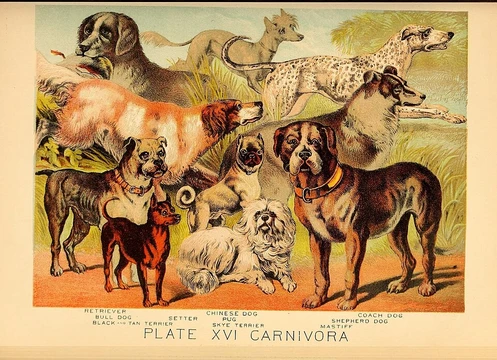
Golden Retriever
Scottish retriever breed known for its gentle nature and golden coat.

via Wikipedia: Golden Retriever · see source
The Golden Retriever is a Scottish breed of retriever dog of medium-large size. It is characterised by a gentle and affectionate nature and a striking golden coat. It is a working dog, and registration is subject to successful completion of a working trial. It is commonly kept as a companion dog and is among the most frequently registered breeds in several Western countries; some may compete in dog shows or obedience trials, or work as guide dogs.
- kennel_club_recognition
- 1913 (Kennel Club), with separate registration beginning in 1913
Verified Timeline
Lore & Background
The Golden Retriever was developed in Scotland in the nineteenth century by Sir Dudley Marjoribanks (later to become Baron Tweedmouth) from Flat-coated Retrievers judiciously crossed with Tweed Water Spaniels and some other British dog breeds. Before the 1952 publication of the detailed stud book, meticulously maintained by Marjoribanks, a number of romantic tales about the breed's origins were published. In the 1860s, Marjoribanks set out to create what, to his mind, was the ultimate breed of retriever at Guisachan, his Scottish estate. He started by acquiring a yellow-coloured Flat-coated Retriever dog named Nous; Nous had been whelped in June 1864 and was the only yellow pup in an otherwise all black-coloured litter. The stud book states that Nous was a Flat-coated Retriever bred by Henry Pelham, 3rd Earl of Chichester on his Stanmer Park estate near Brighton. In 1868, Nous was mated to a Tweed Water Spaniel female named Belle, who is recorded in the stud book as being whelped in 1863 and being of 'Ladykirk breeding'. The litter from this mating consisted of four yellow pups: Primrose, Ada, Cowslip, and Crocus. The female selected from this litter, Cowslip, was mated to a Tweed Water Spaniel called Tweed with the mating producing a bitch pup called Topsy. Cowslip was subsequently mated to a Red Setter called Sampson; that mating produced a dog pup called Jack. Topsy was mated with a black Flat-coated Retriever called Sambo and a bitch pup from that litter, Zoe, was mated back to Jack and two pups from that mating were retained, a dog called Nous II and a bitch called Gill. Gill was mated to a black Labrador Retriever called Tracer, and a bitch pup from that mating, Queenie, was mated back to Nous II; all Golden Retrievers descend from this mating. Marjoribanks is also known to have used a sandy-coloured Bloodhound and another Labrador in subsequent years of the breeding programme. In 1952, Marjoribanks's great-nephew, Giles Fox-Strangways, 6th Earl of Ilchester, teamed up with Elma Stonex, and together they studied Marjoribanks's stud book. In 1960, their research was published, presenting all of the evidence required to counter all tales of Russian ancestry. The stud book, which covers the period from 1868 to 1890, is preserved in the library of the Kennel Club in London. In the early days, Golden Retrievers were called the 'Flat-coated Retriever, Golden'. Initially, the Golden Retriever was considered a colour variety of the former breed. In 1903, the Kennel Club recorded the first examples, listing them in the same register as Flat-coats. In 1904 a Golden Retriever won a field trial and in 1908 the first examples were exhibited at conformation shows. In 1911, a breed club for the breed in England, the Golden Retriever Club, was formed, and the breed was given a new name, the 'Yellow or Golden Retriever'. From this point, they were increasingly seen as a separate breed from the Flat-coated Retriever. It was not until 1913 that the Kennel Club began recording them on a separate breed register from the Flat-coated Retriever, and in 1920, the 'Yellow or' was dropped from the breed name, and they were officially called the 'Golden Retriever'. One early twentieth-century enthusiast of the breed, Winifred Charlesworth, was instrumental in establishing the breed club and in securing its separate Kennel Club recognition. It was she who drew up the first breed standard, which was adopted by the Kennel Club and, with only minor amendments, remains essentially unchanged. She bred and exhibited the first Golden Retriever Show Champion, was a strong advocate for maintaining the working instincts of the breed, and is credited with popularising it at field trials and introducing it to shooting sportsmen.
Reader's Guide
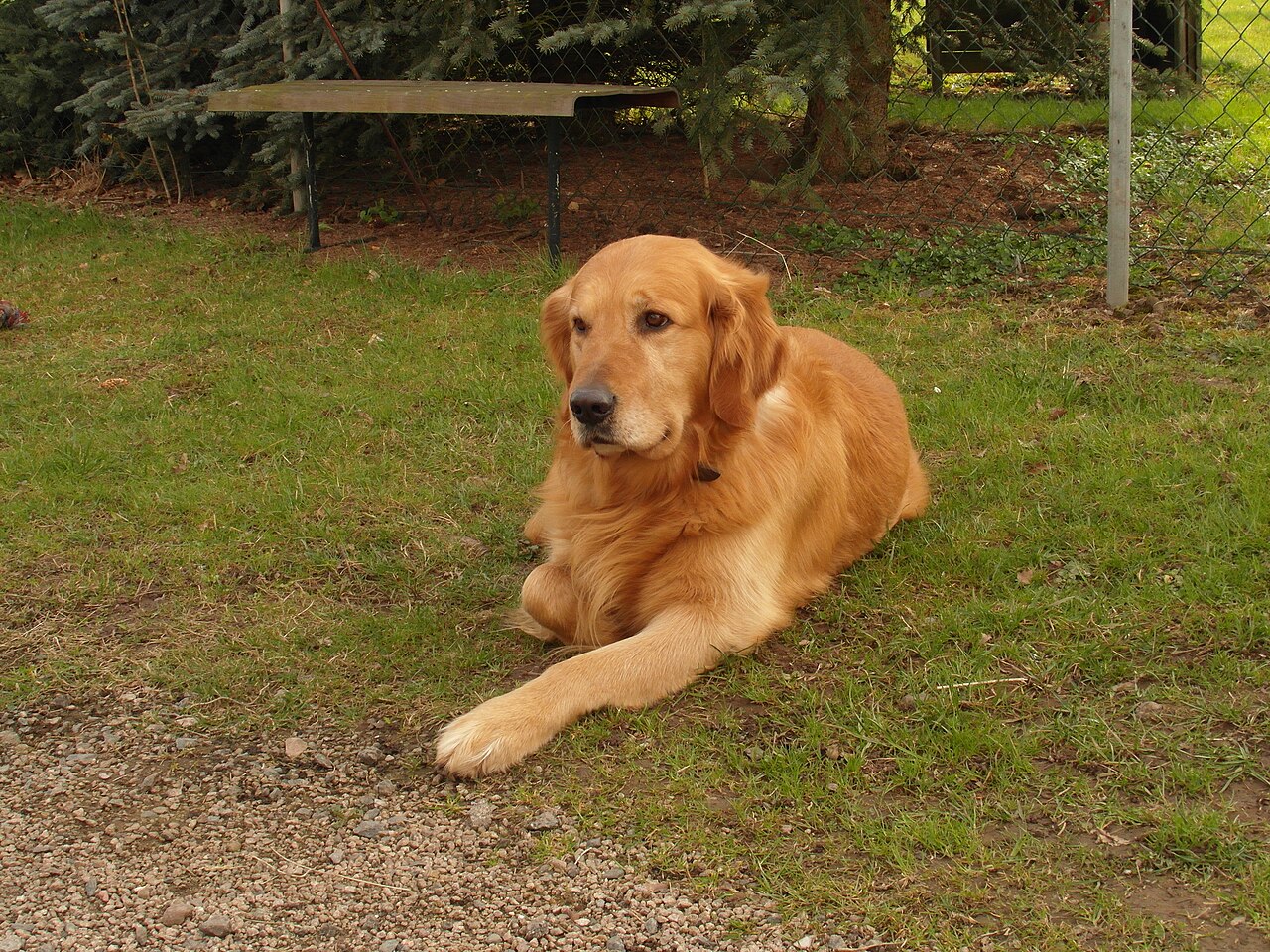
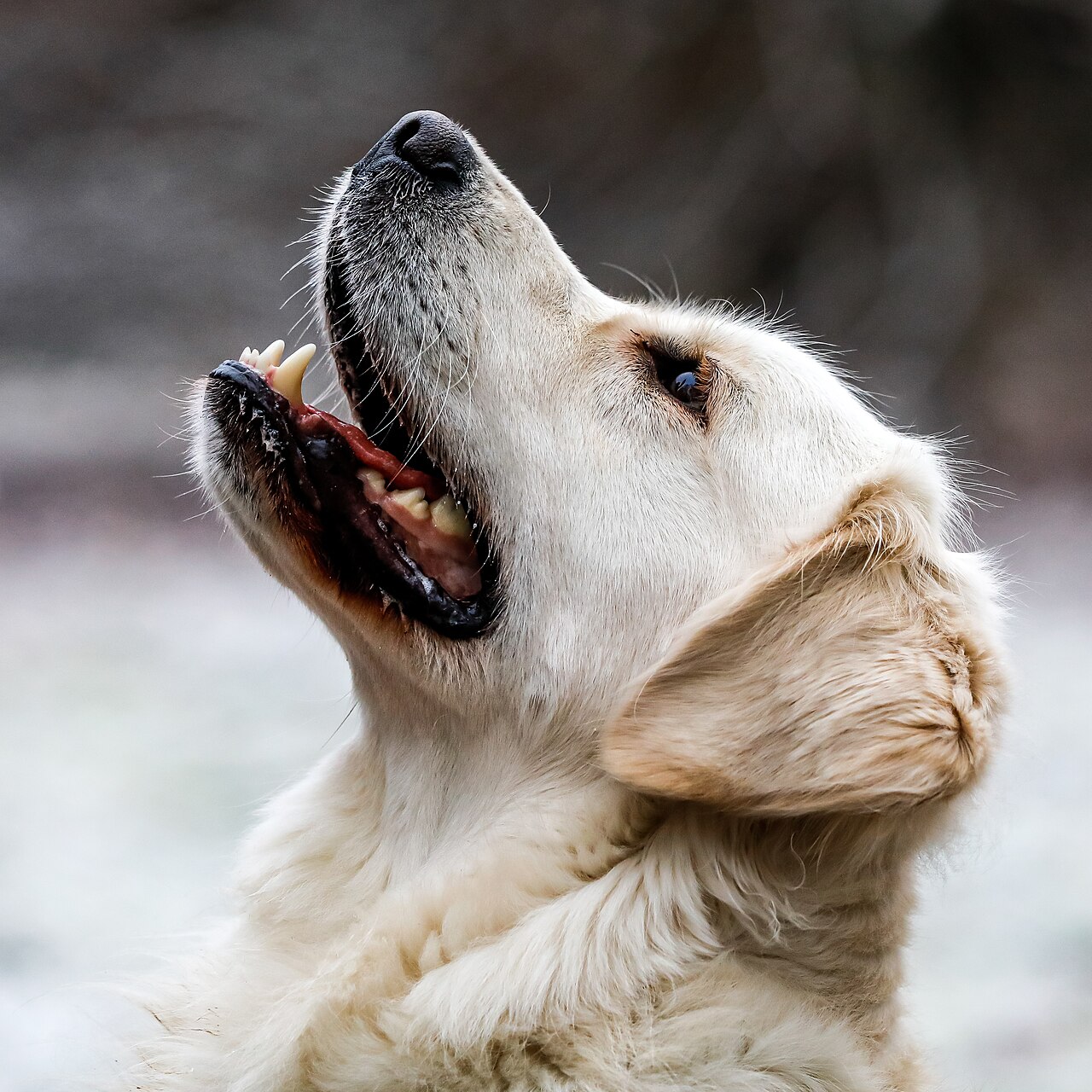
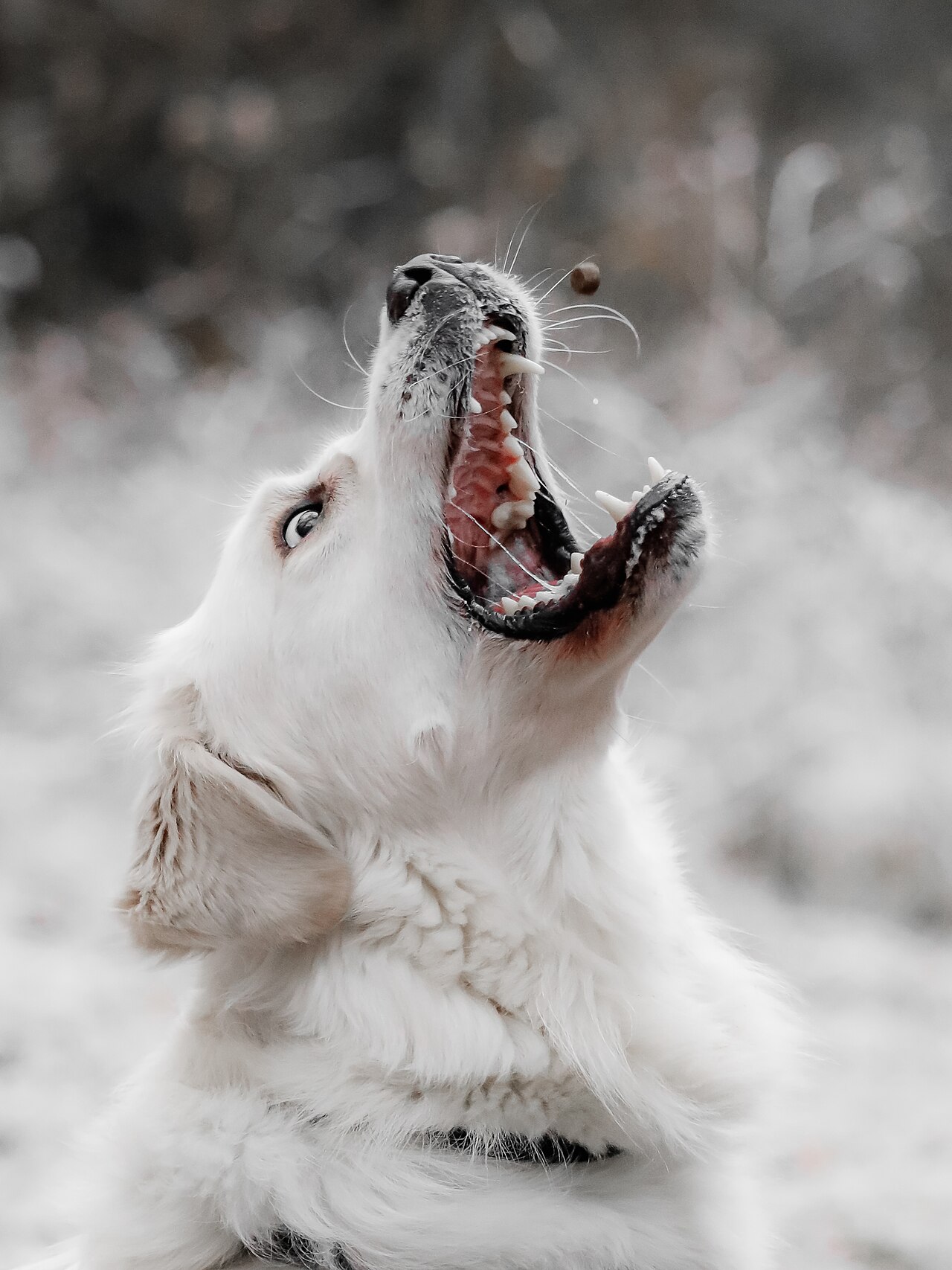
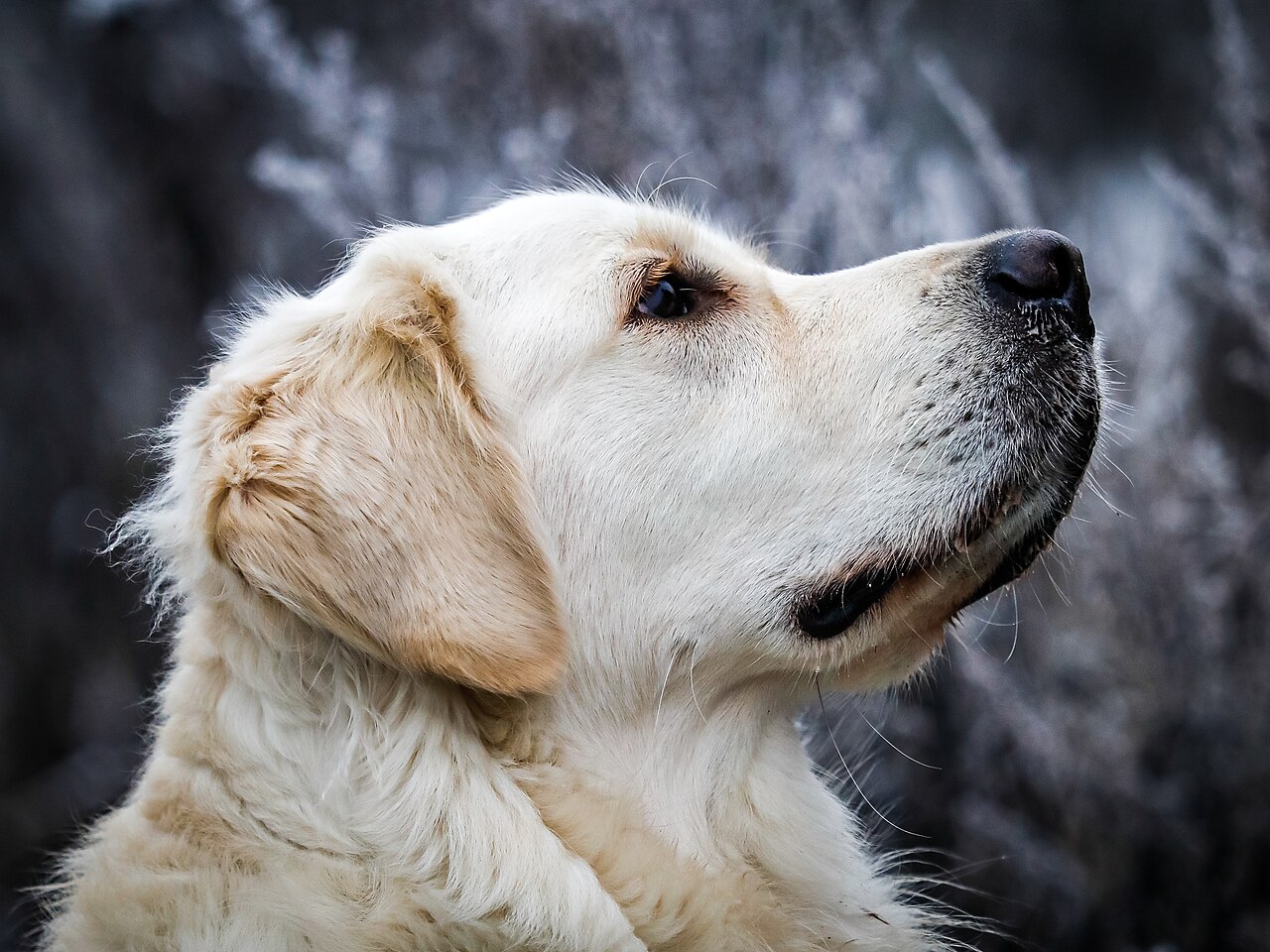
The Golden Retriever is a powerfully built, medium-sized breed of dog; according to the Kennel Club breed standard, dogs stand from 56 to 61 centimetres (22 to 24 in) and bitches from 51 to 56 centimetres (20 to 22 in). Healthy adult examples typically weigh between 25 and 34 kilograms (55 and 75 lb). The double coat is a recognisable and striking feature: the outer coat is long, flat, or wavy, with good feathering on the forelegs, while the undercoat is dense and provides weather resistance. The coat can be any shade of cream, yellow, or gold; it typically becomes paler with age. The Kennel Club breed standard prohibits red or mahogany-coloured coats, but a few white hairs on the chest are permitted. Originally, only yellow or golden coloured examples were permitted; this excluded many outstanding cream coloured dogs. To overcome this, in 1936, the Kennel Club amended its standard to include the cream colour. The cream colour, which in more modern times can be almost white, has become the dominant colour and is particularly favoured by conformation show exhibitors. The Golden Retriever is considered an intelligent, gentle-natured, and very affectionate breed. As is typical with retriever breeds, the breed is generally calm and biddable, being very easy to train and extremely keen to please their humans. The breed is known to make excellent pets and family dogs, being generally extremely tolerant of children and keen to accompany any family member in a range of activities. Due to their affable natures, the breed is often completely devoid of guarding instincts. However, there have also been reports of some very aggressive Golden Retrievers in certain lineages. It has been suggested that genetic factors partially cause these variations in aggression. The breed usually retains many of its gundog traits and instincts, including an excellent sense of smell and a strong instinct to retrieve; even among those not trained as gundogs, it is typical for Golden Retrievers to present their owners with toys or other objects. Compared to other retriever breeds, the Golden Retriever is typically quite slow to mature. In the years after the First World War, its popularity increased markedly, and in the 1920s and 1930s it spread through much of the Western world. The Canadian Kennel Club recognised the breed in 1927, and the American Kennel Club in 1932. The first examples were registered in France in 1934 and in Australia in 1937. The worldwide popularity of the breed meant it did not suffer the misfortunes many British dog breeds did during the Second World War due to British wartime restrictions on the breeding of larger dogs, with ample quality breeding stock available globally to ensure none of its characteristics were lost. Since the 1940s, its popularity has continued to grow, and it has become one of the most recognised and most frequently registered dog breeds in the Western world.
Did You Know?
- The founding dog Nous was a yellow-coloured Flat-coated Retriever whelped in June 1864, the only yellow pup in an otherwise all black-coloured litter.
- All Golden Retrievers descend from a mating between Nous II and Queenie, who was the product of a Labrador Retriever and a line tracing back to Tweed Water Spaniels and Red Setters.
- The breed was originally called the 'Flat-coated Retriever, Golden' and was considered a colour variety of the Flat-coated Retriever until 1913.
- Winifred Charlesworth drew up the first breed standard, which was adopted by the Kennel Club and remains essentially unchanged with only minor amendments.
- A 2024 UK study found a median life expectancy of 13.2 years for the breed, compared to an average of 12.7 for purebreeds and 12 for crossbreeds.
From Newfoundland Waters to British Shores
The Labrador Retriever traces its lineage to a small water dog bred by European settlers in the Colony of Newfoundland, specifically in the region that would later lend the breed its name. These St. John's water dogs first reached British shores in the 1830s, carried on trading vessels plying the route between Canada and Poole in Dorset. Once in Britain, they were crossed with local hunting dogs to produce the versatile gun dog we recognize today. Among the earliest champions of these Newfoundland fishing dogs were the 10th Earl of Home, the 5th Duke of Buccleuch, and Lord John Scott, who imported the breed's progenitors for sporting use. The 2nd Earl of Malmesbury likewise championed the dogs, selectively breeding them for their natural aptitude in waterfowling. Early written accounts sometimes muddled the Labrador with the much larger Newfoundland or the Lesser Newfoundland, but Colonel Peter Hawker drew a clear distinction in his 1846 work, describing the proper Labrador as a smaller, black-coated dog with a long head, deep chest, and a tail carried lower than its Newfoundland counterpart.
Forging a Distinct Breed
By the 1880s, three prominent British landowners—the 3rd Earl of Malmesbury, the 6th Duke of Buccleuch, and the 12th Earl of Home—joined forces to formalize what had been a loose collection of Newfoundland-sourced sporting dogs into a recognized breed. Malmesbury contributed two key males, Buccleuch Avon and Buccleuch Ned, which were mated to bitches carrying the bloodlines originally brought over by the 5th Duke of Buccleuch and the 10th Earl of Home. The resulting offspring form the direct ancestral line from which every modern Labrador Retriever descends. The name Labrador Retriever had already become standard usage in England by 1870. Colour diversity emerged gradually: liver-coloured pups, the term later replaced by chocolate, were recorded at the Buccleuch kennels in 1892, while the first documented yellow individual, Ben of Hyde, was born in 1899 at the kennels of Major C. J. Radclyffe. Formal breed recognition followed with the Kennel Club in 1903, and the first American Kennel Club registration arrived in 1917.
Build, Coat, and the Science of Colour
The Labrador Retriever is a medium-large breed whose body length from withers to tail base should roughly equal its height at the withers. The American Kennel Club sets ideal weights between 25 and 36 kilograms for males and 25 to 32 kilograms for females, while height ranges from 55 to 62 centimetres in dogs and 55 to 60 in bitches. The coat is short, dense, and water-resistant, with a naturally slightly oily texture that keeps the dog warm in cold water. Both the Kennel Club and AKC designate the tail and coat as distinguishing features of the breed, with the AKC specifically calling the otter tail a hallmark alongside temperament. Registered colours are solid black, yellow spanning creamy white to fox-red, and chocolate, a medium to dark brown originally termed liver. Coat colour is governed by three genes: MC1R, Agouti, and CBD103. A yellow coat results from either wild-type alleles at all three loci or a loss-of-function mutation at MC1R, while black requires wild-type MC1R and Agouti paired with the black allele at CBD103. Specialized breeding has also produced notable differences between field and show lines, though both types are bred in both the United States and the United Kingdom, and all Labradors ultimately descend from British lines.
Beyond the Hunt: Temperament and Working Roles
Although the Labrador Retriever was originally developed as a sporting and hunting dog, its disposition has made it one of the most widely kept companion animals in the Western world. The breed is characteristically friendly, energetic, and playful, yet it also possesses a sharp intelligence that demands regular physical exercise and mental engagement to remain well-adjusted. This combination of drive and gentleness has made Labradors exceptionally suited to a range of working roles beyond the field. They are frequently trained as guide dogs for the visually impaired, as assistance dogs for people with disabilities, and as therapy or rescue dogs. Their water-resistant coat and natural affinity for water, inherited from their Newfoundland water-dog ancestors, remain useful in search-and-rescue scenarios. On the health front, the breed carries a noted predisposition to chronic hepatitis, with one UK study reporting an odds ratio of 4.14, a factor that responsible breeders and veterinarians monitor closely. Despite these considerations, the Labrador's blend of athleticism, loyalty, and trainability continues to secure its position as a globally beloved breed.
Common Misconceptions (Editorial)
- Some believe the Golden Retriever has Russian ancestry. In reality, the breed was developed entirely in Scotland by Sir Dudley Marjoribanks, and research published in 1960 definitively disproved those tales. - It is sometimes assumed the breed was always called the Golden Retriever. Initially, it was called the "Flat-coated Retriever, Golden" and was considered a color variety of the Flat-coated Retriever until separate breed registration began in 1913; the "Yellow or" prefix was dropped from the name in 1920. - A common misconception is that all Golden Retrievers descend from a single pair of dogs of the same breed. In fact, the foundational mating was between Nous (a yellow Flat-coated Retriever) and Belle (a Tweed Water Spaniel), with later crosses involving Red Setters, a Black Labrador Retriever, a Bloodhound, and another Labrador.
Why It Matters (Editorial)
The Golden Retriever endures because it was purposefully bred for both working ability and temperament, a combination that makes it as reliable in the field as it is beloved in the home. Its consistent popularity across Western countries reflects a breed shaped not by romantic myths but by meticulous, documented breeding that prioritized function, trainability, and gentle companionship.
Gallery
Frequently Asked Questions
Who is Golden Retriever?
Golden Retriever is a medium-large Scottish retriever breed that was developed in the late 1800s by Sir Dudley Marjoribanks on his Guisachan estate. It is widely recognized for its soft golden coat and notably gentle, affectionate temperament.
What are Golden Retriever's key roles?
The breed serves in three main capacities: as a family companion, as a working retriever for hunting, and as a service or guide dog for people with disabilities. Its steady temperament and strong trainability make it a top choice across all three roles.
Where does Golden Retriever originate from?
The breed was created in Scotland during the late nineteenth century at the Guisachan estate, where Sir Dudley Marjoribanks selectively bred dogs to produce a reliable water and land retriever with a distinctive golden coloring.
What makes Golden Retriever stand out physically?
Its most recognizable trait is the dense, water-resistant coat that ranges from light cream to deep gold. Combined with a broad head, kind expression, and medium-large build, the look has made it one of the most instantly identifiable dog breeds in the world.
When did Golden Retriever receive official kennel club recognition?
The UK Kennel Club granted the breed its first registration in 1913, at which point it also began a separate breed register. That 1913 entry marked the point where the Golden Retriever was formally distinguished from other retriever lines in official records.
More in Dog Breeds 1-22
Spotted an error? Know more?
This is a living reference — every entry is fact-audited, and reader corrections feed straight into our audit queue. Suggest an edit · See this site's audit record