Rottweiler
Ancient herding breed, now used worldwide in service and protection roles.

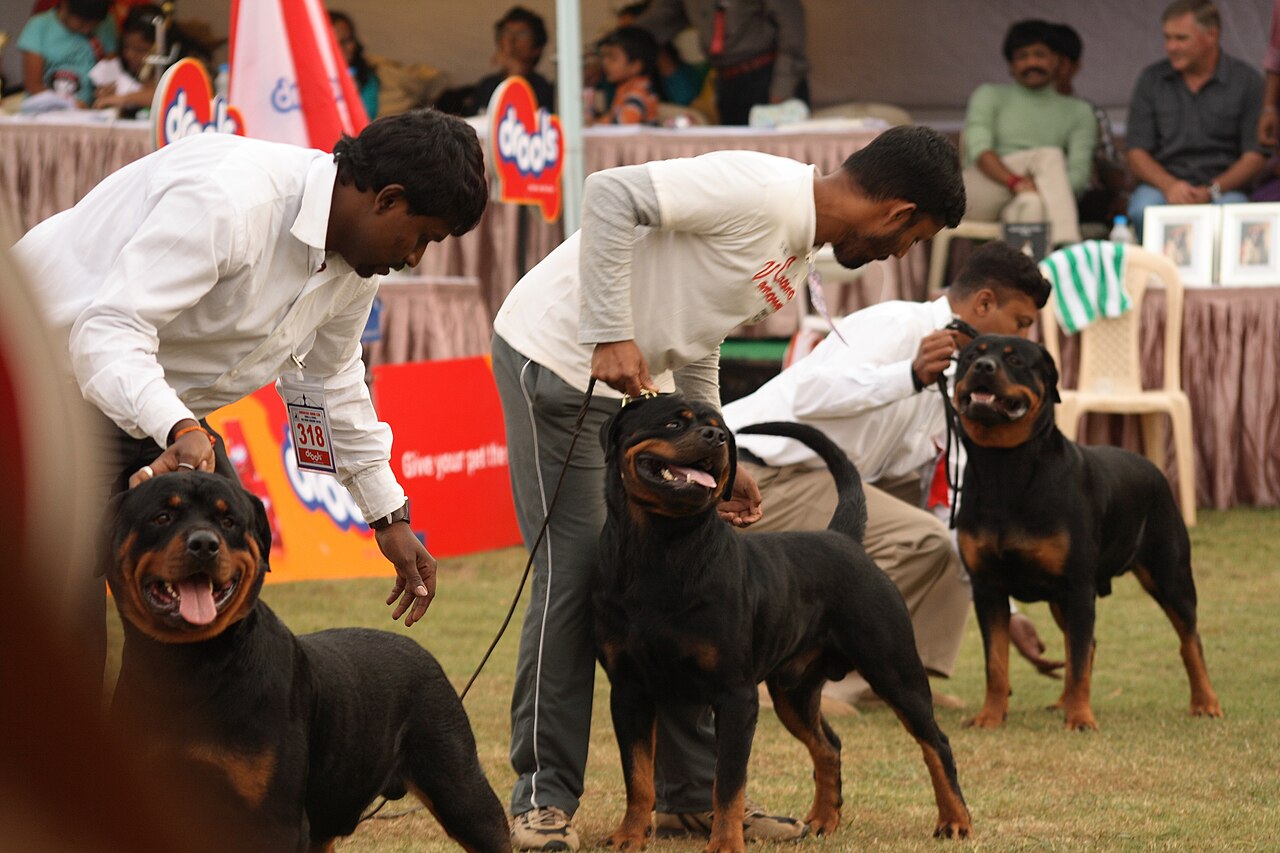
Ravinder M A · CC BY 2.0
The Rottweiler is a breed of domestic mastiff type dog, regarded as medium-to-large or large. Known in German as Rottweiler Metzgerhund, meaning Rottweil butchers' dogs, they were historically used to herd livestock and pull carts laden with butchered meat to market. Today, they serve as search and rescue dogs, guard dogs, and police dogs.
- origin
- Rottweil, Germany
- breed group
- Working dog
- height
- Not specified in source
- weight
- Not specified in source
- life span
- Not specified in source
- coat
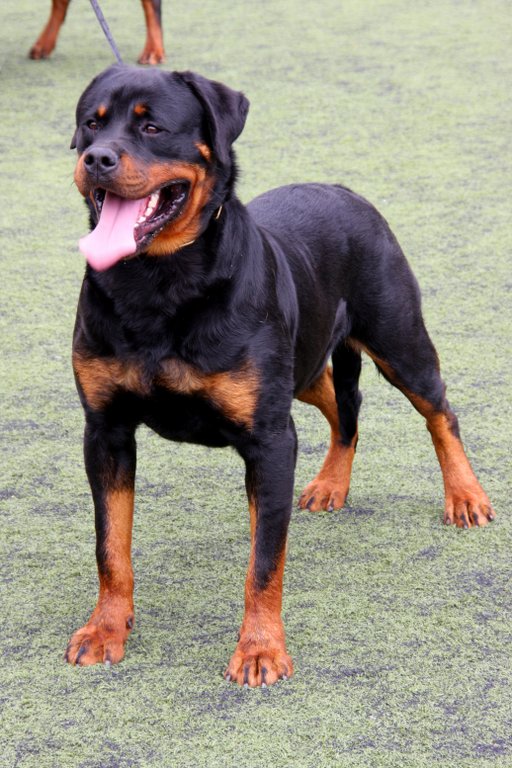
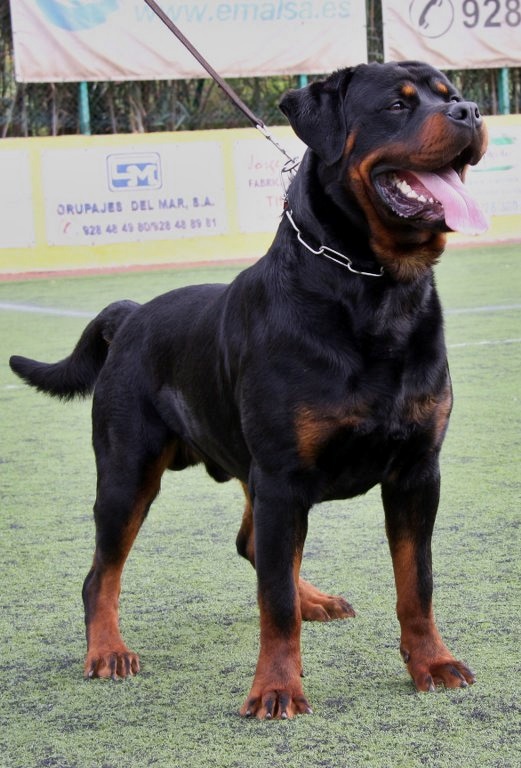
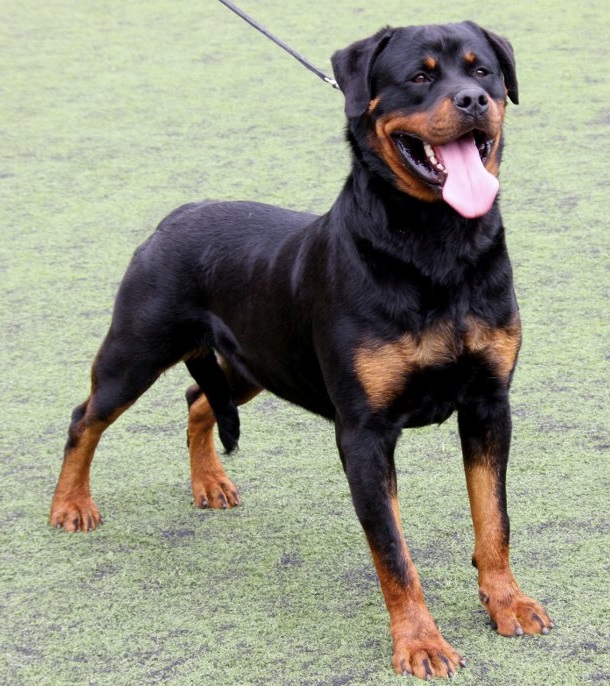
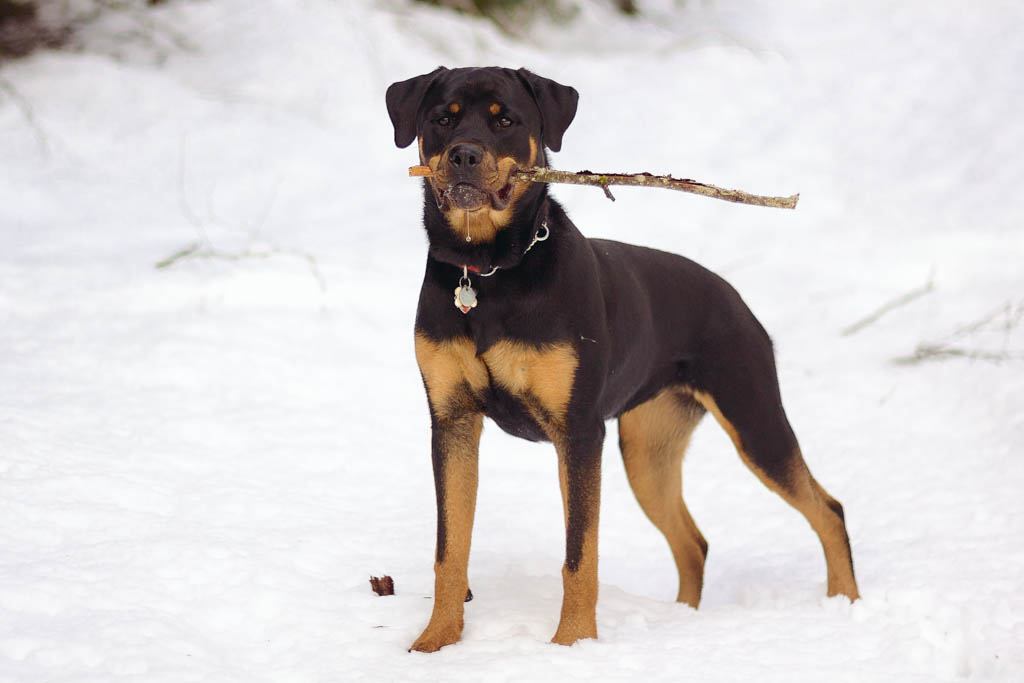
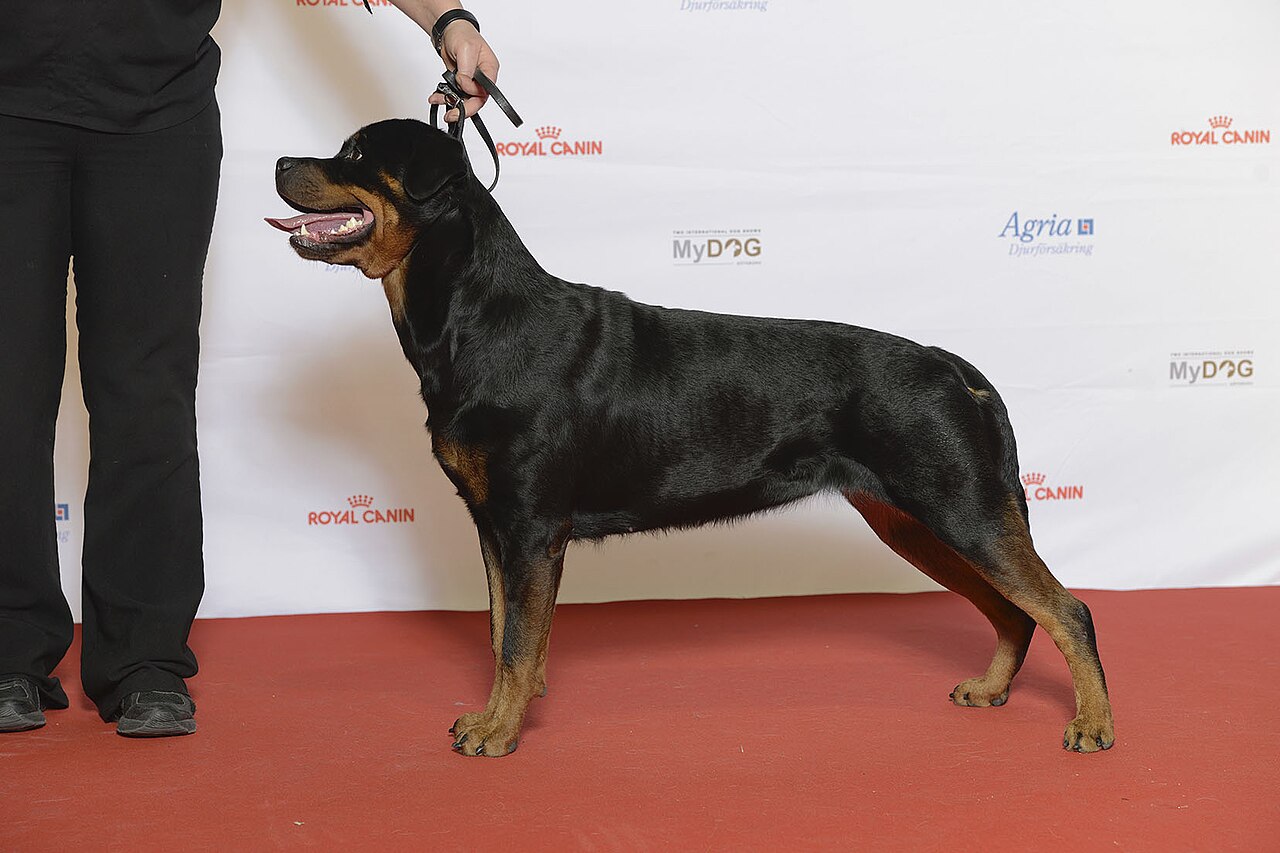
- Medium-length, coarse, dense outer coat with undercoat on neck and thighs
- color
- Black with clearly defined rich tan markings
Lore & Background
In the mid-1990s, the Rottweiler reached an all-time high in popularity, becoming the most registered dog by the American Kennel Club.
Reader's Guide
The Rottweiler's significance lies in its ancient lineage and versatile working history. Originating as a Roman herding and driving dog, it evolved in Rottweil, Germany, into a butcher's dog used for driving cattle and pulling meat carts. This role continued until the mid-19th century when railways replaced droving. The breed's revival came with the demand for police dogs before World War I, and it served in multiple military roles during both World Wars. Today, it remains a popular working breed, used for search and rescue, guarding, and police work, while still herding in many parts of the world. The FCI standard describes the breed as a dog of abundant strength, black with rich tan markings, suited to being a companion, service, rescue, and working dog. Its gait is a trot, and its movement should be harmonious, steady, and unrestricted.
Did You Know?
- The Rottweiler is considered one of the oldest surviving dog breeds, with origins going back to Roman times.
- The breed's German name, Rottweiler Metzgerhund, means 'Rottweil butchers' dogs' because they were used to pull carts laden with butchered meat to market.
- In the mid-1990s, the Rottweiler was the most registered dog by the American Kennel Club.
Roman Roads and the Birth of a Breed
The Rottweiler's story stretches back to the era of the Roman legions, when sturdy dogs accompanied soldiers as they crossed the Alps. These animals served as herders and driving dogs, protecting their human handlers while moving cattle along the march routes. When the legions reached the region around the old free city of Rottweil, these Roman dogs encountered local native breeds and interbred naturally. Over generations, the resulting type settled into a specific role: driving and guarding cattle herds while also defending the property and families of their owners. The butchers of Rottweil took particular interest in this versatile dog, breeding it strictly for performance and practical utility rather than appearance. What emerged was a first-rate watch dog, driving dog, and draught animal all in one. The breed took its name directly from the city, becoming known across the region as the Rottweil butcher's dog — a title that reflected both its geographic roots and its working purpose in the meat trade.
From Butcher's Yard to Battlefield
For centuries, the Rottweiler's daily life centered on the butcher's trade. The dogs herded livestock and hauled heavy carts loaded with butchered meat into market, a role that defined the breed well into the mid-nineteenth century. The arrival of railways gradually displaced the need for droving, and with it, the traditional working life of the Rottweiler began to shift. Yet the breed's versatility ensured it never lost its purpose. In the run-up to the First World War, a surge in demand for police dogs sparked a renewed interest in the Rottweiler's capabilities. During both World Wars, these dogs served in a remarkable range of military capacities — as messengers carrying dispatches, as ambulance dogs assisting the wounded, as draught animals hauling supplies, and as guard dogs protecting installations. In the modern era, Rottweilers continue to herd stock in various parts of the world while also finding purpose as search-and-rescue animals, guard dogs, and police partners, proving that a breed forged for the butcher's yard can adapt to nearly any working role.
The Club Movement and the Shape of a Standard
The organized stewardship of the Rottweiler began in the final years before the First World War. The SDRK, by contrast, registered around 3,000 Rottweilers and placed greater emphasis on the breed's morphology. Today, the ADRK is recognized worldwide as the home club of the Rottweiler, serving as the breed's central institutional anchor.
Global Recognition and Enduring Popularity
The Fédération Cynologique Internationale regards the Rottweiler as one of the oldest surviving dog breeds, and its standard paints a picture of a dog built for both power and grace — abundant strength wrapped in a black coat with clearly defined rich tan markings, a powerful presence that never sacrifices nobility, and an exceptional aptitude for companion, service, rescue, and working roles. The breed's international journey accelerated in the twentieth century. The mid-1990s marked the breed's absolute peak in the United States, when the Rottweiler became the most registered purebred with the AKC.
Common Misconceptions (Editorial)
A common misconception is that the Rottweiler is a recent breed developed only in modern Germany. In fact, the Rottweiler is considered one of the oldest surviving dog breeds, with origins going back to Roman times. Another misconception is that the breed’s original purpose was primarily guarding or fighting; historically, Rottweilers were used to herd livestock and pull carts laden with butchered meat to market.
Why It Matters (Editorial)
The Rottweiler endures as a breed because its ancient lineage as a working dog—from Roman drover to modern police and rescue partner—demonstrates remarkable adaptability and intelligence. Despite its formidable reputation, the breed’s historical role as a loyal butcher’s assistant highlights a deep bond with humans that continues to make it a valued companion and protector today.
Gallery
Frequently Asked Questions
What is a Rottweiler?
The Rottweiler is a sturdy, medium-to-large mastiff-type dog with roots stretching back to ancient times in Germany. It is one of the oldest herding breeds still alive and active today.
What were Rottweilers originally bred to do?
These dogs were historically tasked with herding livestock and hauling heavy carts of butchered meat into market. Their German nickname, Rottweiler Metzgerhund, simply means "Rottweil butchers' dogs."
What do Rottweilers do in modern times?
Today they are deployed worldwide in demanding service roles such as search and rescue, police work, and property guarding. Their combination of strength, intelligence, and loyalty makes them well suited to protection and rescue duties.
What does a Rottweiler's coat look and feel like?
They carry a medium-length, coarse, and dense outer coat over a softer undercoat that is most prominent along the neck and thighs. This double-layered coat gives them a rugged, weather-resistant look.
Which breed group do Rottweilers belong to?
The Rottweiler is classified under the Working dog group. Although their ancient roots lie in herding, their modern-day focus on service and protection work solidifies that working-dog placement.
More in Dog Breeds 1-22
Spotted an error? Know more?
This is a living reference — every entry is fact-audited, and reader corrections feed straight into our audit queue. Suggest an edit · See this site's audit record