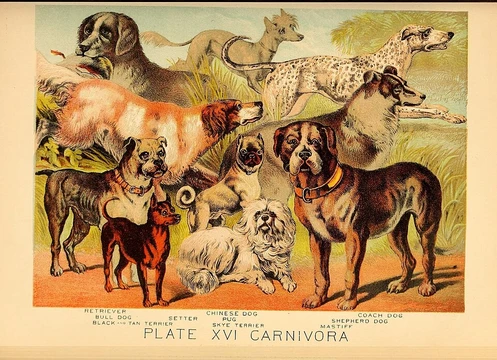
Siberian Husky
Arctic sled dog developed by the Chukchi people for endurance and companionship.

via Wikipedia: Siberian Husky · see source
The Siberian Husky is a medium-sized working sled dog belonging to the Spitz genetic family, recognizable by its thickly furred double coat, erect triangular ears, and distinctive markings. Originating in the Russian Far East, the breed was first developed by the Chukchi people for sled pulling and companionship, and later introduced to Nome, Alaska during the Nome Gold Rush by Russian fur trader William Goosak. Today, it is typically kept as a house pet but remains used by competitive and recreational mushers.
- origin
- Russian Far East (Chukchi Peninsula, Siberia)
- breed group
- Working sled dog (Spitz family)
- height (male)
- 20–24 inches (51–61 cm) at withers
- height (female)
- 19–23 inches (48–58 cm) at withers
- weight (male)
- 45–60 pounds (20–27 kg)
- weight (female)
- 35–50 pounds (16–23 kg)
- coat
- Thick double coat (undercoat and guard hairs)
Verified Timeline
Lore & Background
The Siberian Husky was originally developed by the Chukchi people of the Chukchi Peninsula in eastern Siberia. They were brought to Nome, Alaska in 1908 to serve as working sled dogs, and were eventually developed and used for sled dog racing. A 2015 DNA study indicated that the Siberian Husky, Alaskan Malamute, and Alaskan husky share a close genetic relationship and are related to Chukotka sled dogs from Siberia, separate from Inuit dogs. Siberian Huskies show a genetic affinity with historical East Siberian dogs and ancient Lake Baikal dogs, tracing to a lineage over 9,500 years old. A 2024 genomic analysis of 344 dogs (including 280 Siberian Huskies) identified four genetically distinct populations: Show, Pet, Racing, and Seppala Siberian Sleddogs. Around half of modern racing Siberian Huskies show genetic admixture from European breeds, consistent with that seen in the Alaskan Husky. The Show and Seppala populations had the smallest effective population size; Pet and Seppala populations showed the highest number of harmful alleles; and the Show population had the lowest heterozygosity, indicating sustained inbreeding. Several Arctic dog breeds, including the Siberian Husky, show significant genetic closeness with the now-extinct Taimyr wolf due to admixture of 1–3%, which may have provided beneficial adaptations to high-latitude environments.
Reader's Guide
The Siberian Husky holds significance as a breed that bridges ancient Arctic working traditions with modern companion and sport roles. Its development by the Chukchi people for sled pulling in extreme cold demonstrates a deep human–canine partnership adapted to harsh environments. The breed's introduction to Alaska during the Gold Rush and subsequent use in sled dog racing highlight its historical role in exploration and transport. Genetic studies reveal a complex lineage with ancient roots and recent admixture, reflecting both preservation of traditional bloodlines and selective breeding for performance. The 2024 population analysis underscores ongoing challenges: inbreeding in show lines, harmful alleles in pet and Seppala populations, and gene flow from outside breeds in racing lines. The breed's legacy includes its distinctive appearance—double coat, varied eye colors, and howling behavior—and its reputation as an energetic, friendly companion that requires significant exercise and secure containment. Its genetic closeness to the Taimyr wolf illustrates how ancient introgression may have aided adaptation to Arctic conditions, contributing to the breed's resilience.
Did You Know?
- The Siberian Husky's lineage traces back over 9,500 years, showing genetic affinity with ancient Lake Baikal dogs.
- A 2024 genomic analysis identified four genetically distinct populations within the breed: Show, Pet, Racing, and Seppala Siberian Sleddogs.
- Siberian Huskies show a 1–3% genetic admixture from the now-extinct Taimyr wolf of North Asia.
- The breed can withstand temperatures as low as −50 to −60 °C (−58 to −76 °F) thanks to its double coat.
- The people of Nome referred to Siberian Huskies as 'Siberian Rats' due to their size of 40–50 lb (18–23 kg), versus the Alaskan Malamute's 75–85 lb (34–39 kg).
Origins & Indigenous Heritage
The Siberian Husky traces its roots to the Russian Far East, where the Chukchi people of the Chukchi Peninsula first developed the breed as a working sled dog and companion. The breed's development wasn't limited to one group—other indigenous Siberian peoples across North Asia, including the Koryak, Yukaghir, and Kamchadal, also raised and bred these dogs. Their ancestors lived in the extremely cold and harsh environment of the Siberian Arctic, shaping a breed that is active, energetic, and remarkably resilient. The dogs' journey westward into North America came in 1908, when William Goosak, a Russian fur trader, brought them to Nome, Alaska during the Nome Gold Rush. There they served as sled dogs working the mining fields and navigating terrain that would otherwise be impassable. While the breed is now typically kept as a house pet, it continues to serve its original purpose for competitive and recreational mushers who still rely on them as sled dogs.
Ancient Genetic Lineage
A 2015 DNA study revealed that the Siberian Husky shares a close genetic bond with the Alaskan Malamute and the Alaskan husky, all three linking back to Chukotka sled dogs from Siberia. Notably, these breeds remain genetically distinct from the two Inuit dogs—the Canadian Eskimo Dog and the Greenland Dog. The Husky also shows a genetic affinity with historical East Siberian dogs and ancient Lake Baikal dogs, placing its lineage at over 9,500 years old. Perhaps most strikingly, several Arctic dog breeds, including the Siberian Husky, exhibit significant genetic closeness to the now-extinct Taimyr wolf of North Asia. Research indicates that between one and three percent of their ancestral genome came from wolf introgression, a genetic exchange that likely provided early high-latitude dogs with phenotypic variation advantageous for surviving in a new and challenging environment. This finding also indicates that present-day dog breeds descend from more than one region.
Modern Population Structure & Breeding Challenges
A 2024 genomic analysis examining 344 individual dogs, including 280 Siberian Huskies alongside reference populations, mapped the breed's modern population structure and identified four genetically distinct groups: Show, Pet, Racing, and Seppala Siberian Sleddogs. The study uncovered concerning patterns. Around half of the dogs used in sleddog racing—spanning the Racing and Seppala groups—carried genetic admixture from European breeds outside the Arctic dog lineage, a pattern consistent with what is seen in the Alaskan husky. This gene flow from unrelated breeds, possibly introduced to enhance athletic performance under changing climates and racing conditions, has blurred the purebred boundaries at various points in history. The Show population displayed the lowest heterozygosity, signaling higher relatedness and reduced genetic diversity likely driven by sustained long-term inbreeding. Meanwhile, the Pet and Seppala groups showed the highest number of harmful alleles, and the Show and Seppala populations had the smallest effective population sizes, raising questions about long-term breed health.
Physical Adaptation to the Arctic
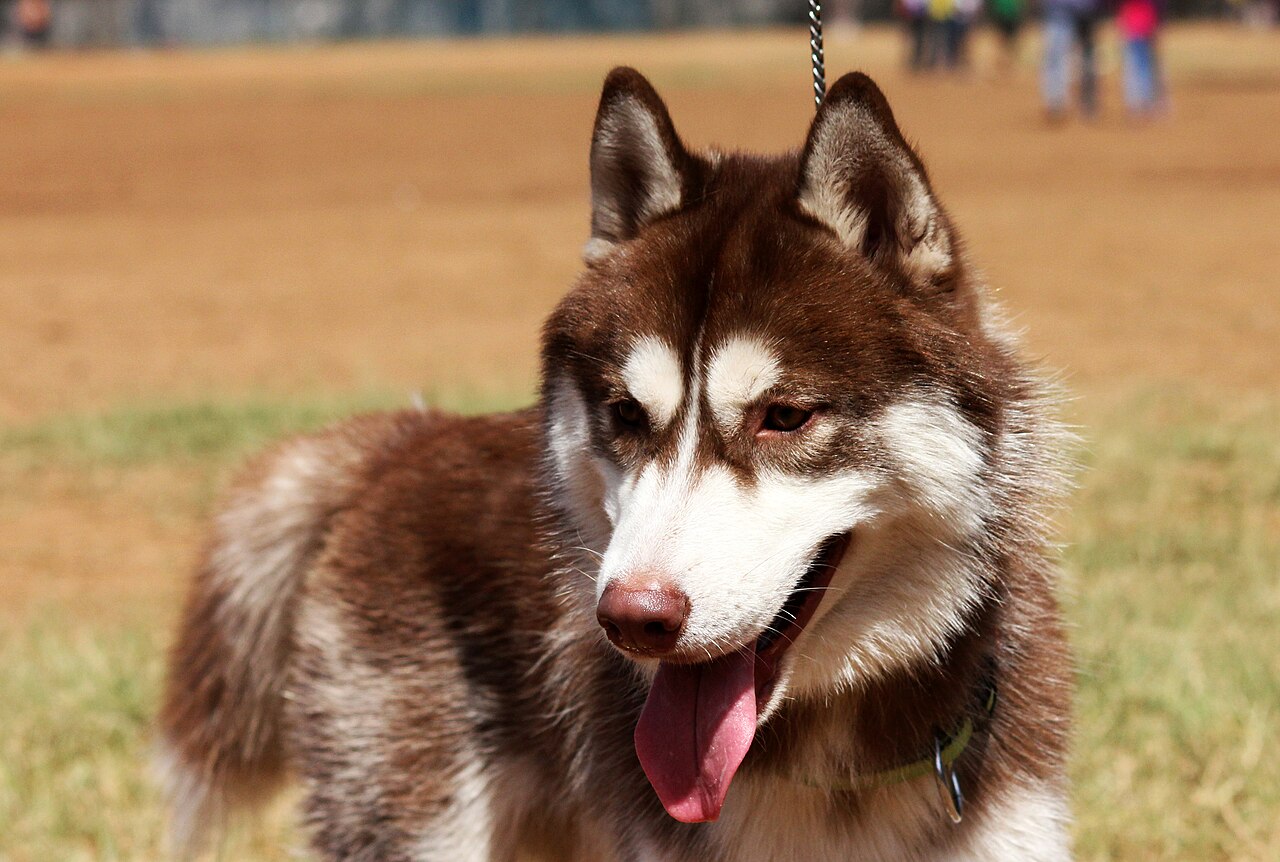
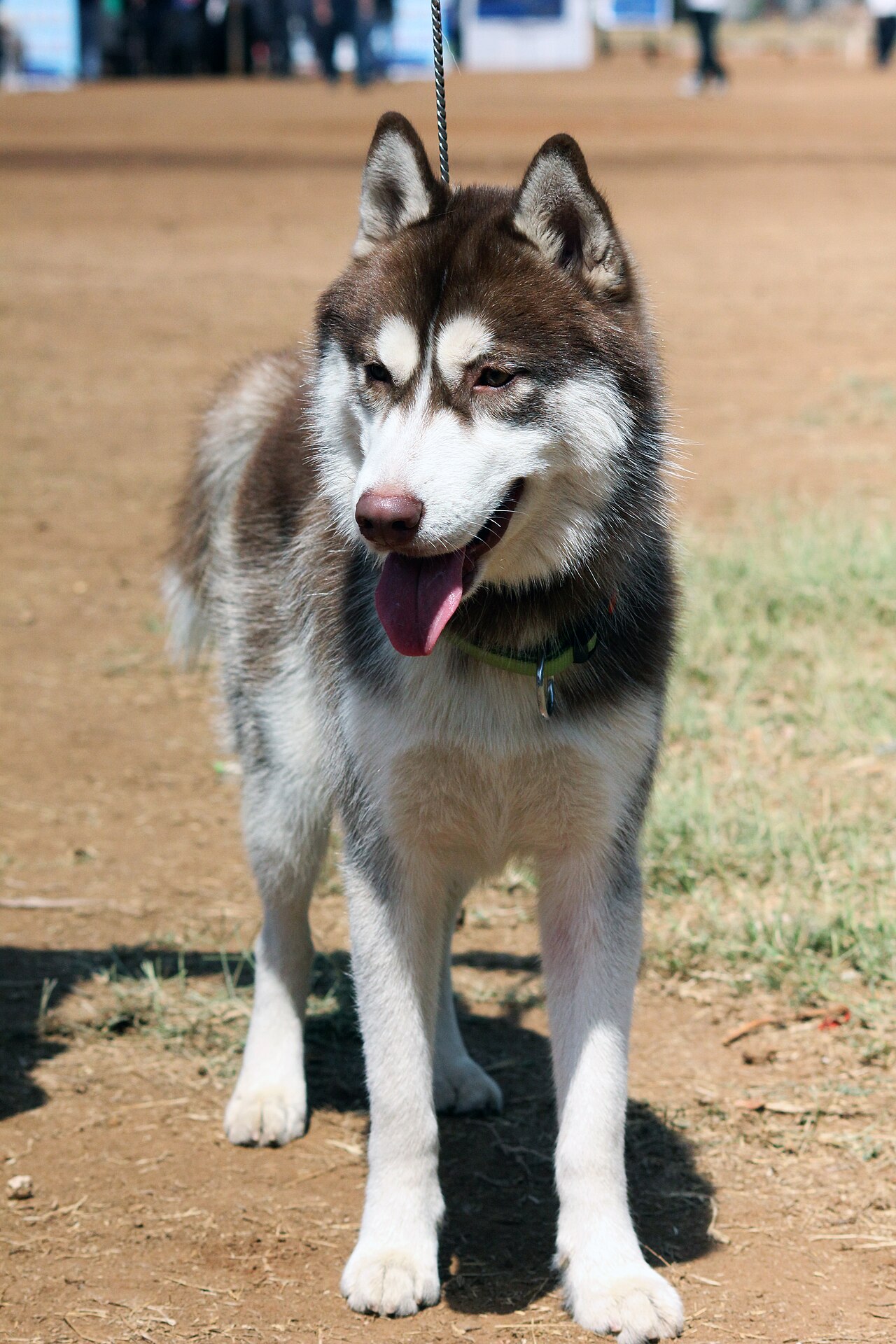
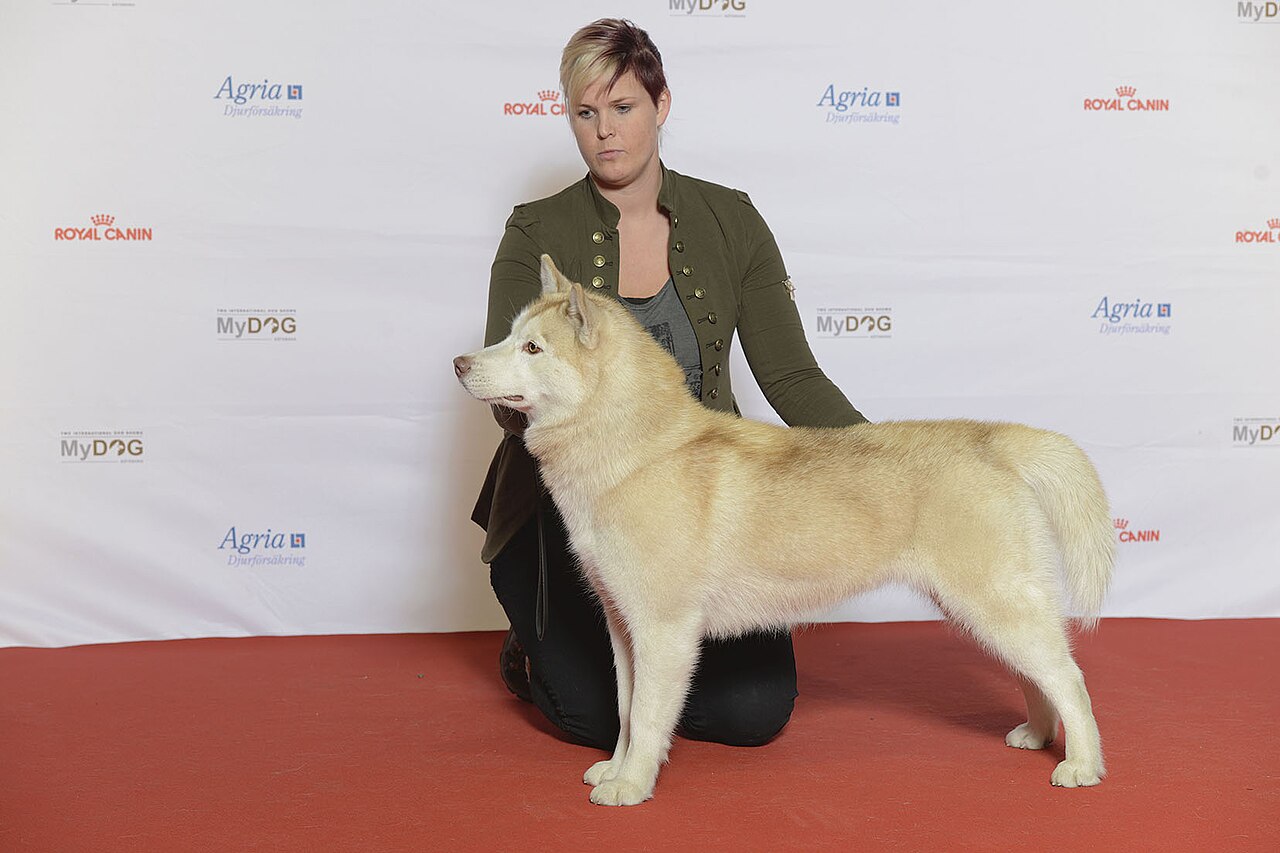
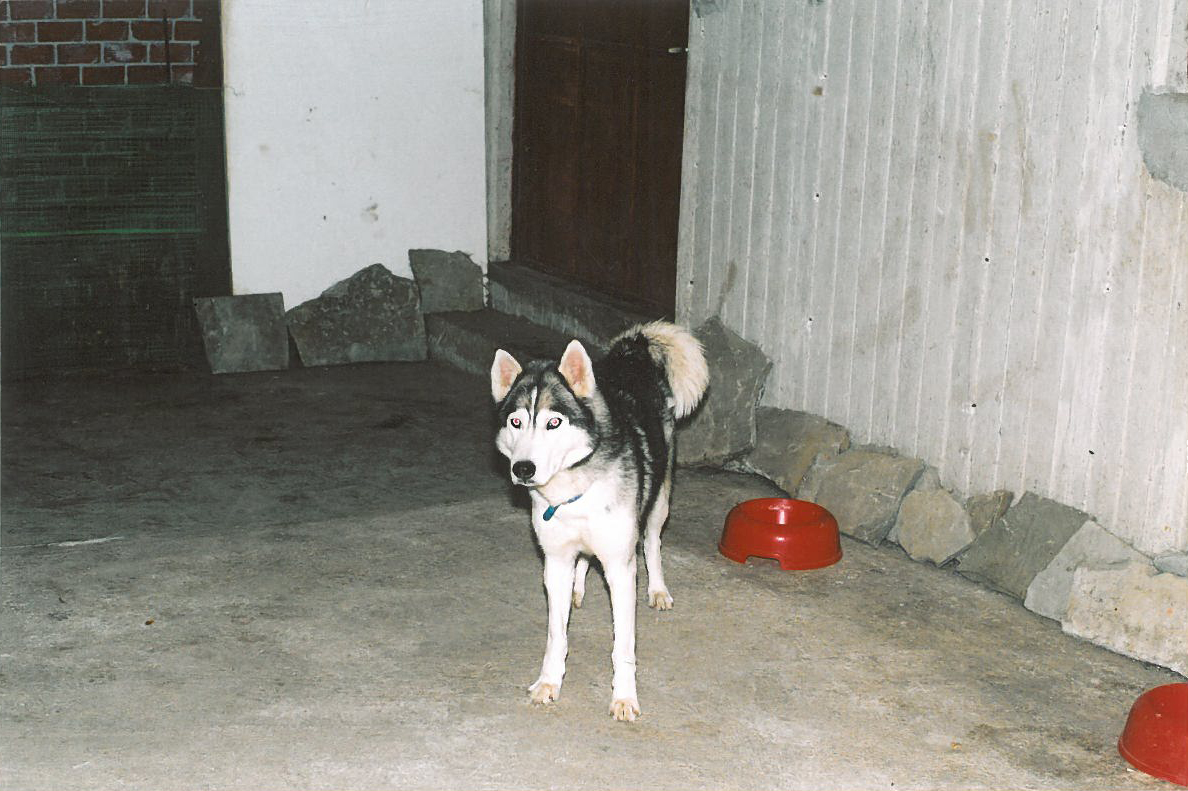
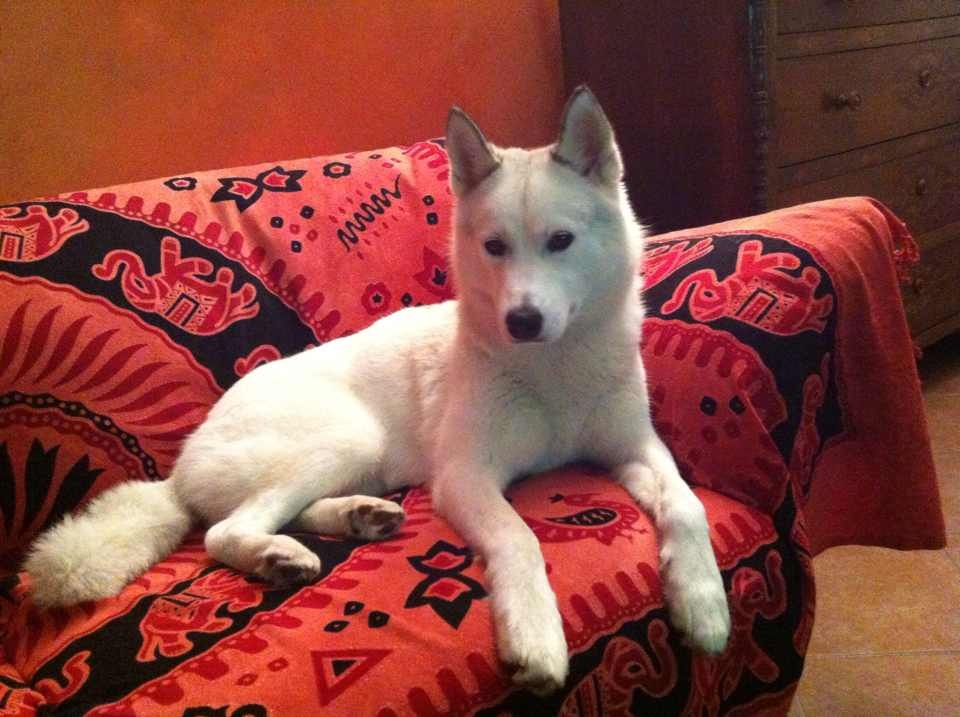
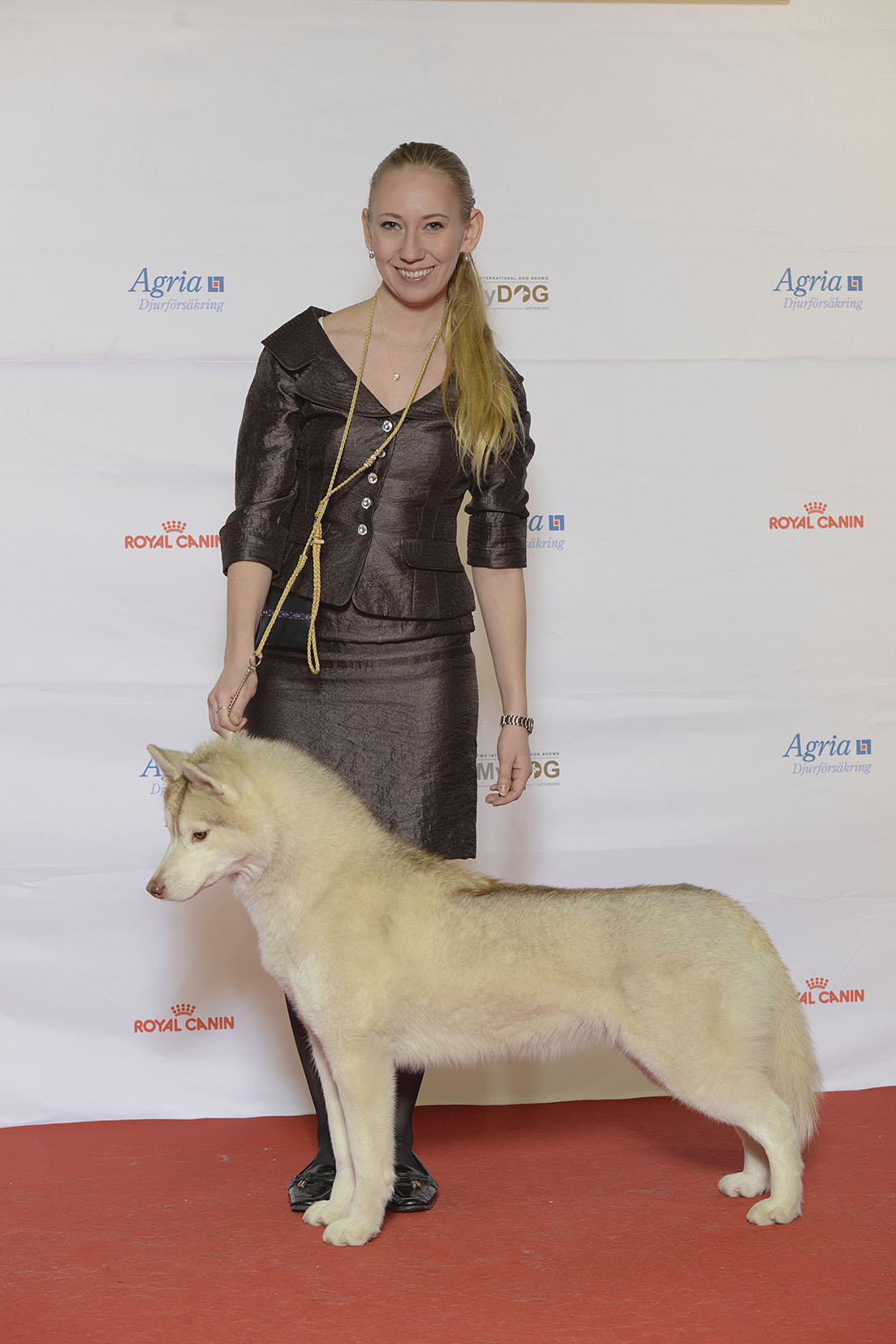
The Siberian Husky's most defining physical trait is its double coat, notably thicker than that of most other dog breeds. It consists of a dense, finely wavy undercoat beneath a longer topcoat of thicker, straight guard hairs, a combination that protects the dog effectively against harsh Arctic winters as severe as −50 to −60 °C (−58 to −76 °F) while also reflecting heat in summer. The undercoat is often absent during shedding, and the thick coat demands weekly grooming. An excessively long coat, sometimes called a 'wooly' or 'woolie' coat, is considered a fault by the breed's standard because it lacks the thicker protection of the standard coat's guard hairs, obscures the dog's clear-cut outline, causes quicker overheating during serious harness work, and becomes easily matted and encrusted with snow and ice. Coat colors range from black and white, copper-red and white, grey and white, pure white, and the rare agouti, with striking masks, spectacles, and other facial markings occurring in wide variety. The AKC and KC permit all colors from black to pure white but exclude merle patterns, which are associated with health issues and impure breeding.
Common Misconceptions (Editorial)
1. The breed’s name might suggest a Russian origin broadly, but the Siberian Husky was specifically developed by the Chukchi people on the Chukchi Peninsula in the Russian Far East. 2. Despite their wolf-like appearance, the breed is not closely related to modern wolves; DNA evidence shows a 1–3% genetic admixture from the extinct Taimyr wolf, not a direct lineage from living wolf populations. 3. The nickname “Siberian Rat” given in Nome was not an insult to the breed’s quality—it simply reflected their smaller size (40–50 lb) compared to the larger Alaskan Malamute (75–85 lb).
Why It Matters (Editorial)
The Siberian Husky endures as a bridge between ancient human partnership and modern companionship—its lineage stretches back over 9,500 years, yet it remains a beloved pet and competitive sled dog today. The breed’s genetic diversity, from pure Show lines to admixed Racing populations, also serves as a living laboratory for understanding adaptation, domestication, and the costs of selective breeding.
Gallery
Frequently Asked Questions
What is a Siberian Husky?
A Siberian Husky is a medium-sized dog from the Spitz family, instantly recognizable by its dense double coat, pointed upright ears, and bold facial markings. It was originally bred as an Arctic workhorse for pulling sleds.
Where did the Siberian Husky originate?
The breed was developed by the Chukchi people on the Chukchi Peninsula in the Russian Far East, where it served as both a reliable sled-pulling partner and a household companion. It later crossed into Alaska during the Nome Gold Rush era.
What role does the Siberian Husky serve?
It was bred specifically for long-distance endurance sled pulling across harsh Arctic terrain. While many are now kept as family pets, the breed still sees active use in competitive and recreational mushing.
How big does a Siberian Husky get?
Males typically stand 20 to 24 inches at the shoulder and weigh 45 to 60 pounds, while females are a bit smaller at 19 to 23 inches and 35 to 50 pounds.
How did the Siberian Husky end up in Alaska?
Russian fur trader William Goosak brought the breed to Nome during the gold rush, where its proven sled-pulling ability quickly made it an essential working dog for prospectors and freight haulers.
More in Dog Breeds 1-22
Spotted an error? Know more?
This is a living reference — every entry is fact-audited, and reader corrections feed straight into our audit queue. Suggest an edit · See this site's audit record