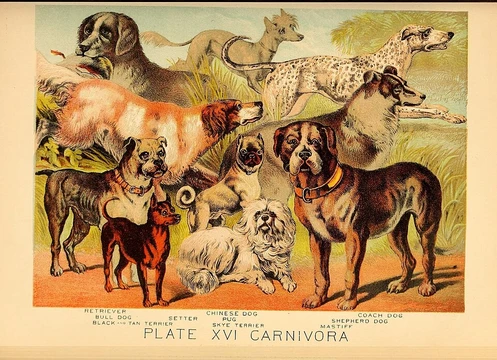
Great Dane
German breed of large mastiff-sighthound, historically used for hunting and guarding.

via Wikipedia: Great Dane · see source
The Great Dane is a German breed of large mastiff-sighthound, descending from hunting dogs of the Middle Ages used to hunt bears, wild boar, and deer. It is one of the two largest dog breeds in the world, along with the Irish Wolfhound, and was historically kept as a guardian dog of German nobility.
- origin
- Germany
- breed type
- Mastiff-sighthound
- size
- One of the two largest dog breeds in the world
- minimum height (male)
- 76 cm (30 in)
- minimum height (female)
- 71 cm (28 in)
- average lifespan
- 10.6 years (2024 UK study)
- common health issues
- Bloat, dilated cardiomyopathy
Lore & Background
In the sixteenth century, nobility across Europe imported strong, long-legged dogs from England and Ireland, known in Germany as Englische Docke or Englische Tocke, later spelled Dogge. These dogs were bred in German courts independently from English methods from the start of the 17th century, used for hunting bear, boar, and deer. Favorites, called Kammerhunde (chamber dogs), wore ornate collars and guarded sleeping princes from assassins at night. As hunting customs changed with firearms, the Englische Dogge became rare, kept only as a luxury or hobby dog. In 1878, a Berlin committee renamed the breed from Englische Dogge to Deutsche Dogge, laying the foundation for the modern breed. In the 19th century, English speakers called it a German boarhound. Due to geopolitical tensions between Germany and France and Britain, the dog became known as the Great Dane—a translation of the French Grand Danois—despite no known connection to Denmark. In Germany it remains Deutsche Dogge; in Scandinavian languages, the French name and pronunciation are used. In the late 19th century, the dogs were sometimes called Reichshund ('Empire dog') due to their association with Chancellor Otto von Bismarck.
Reader's Guide
The Great Dane is significant as one of the two largest dog breeds globally, combining strength and elegance in a well-balanced, muscular body. Its history reflects the shifting roles of dogs from medieval hunting and guarding companions to modern luxury pets. The breed's name change from Englische Dogge to Deutsche Dogge in 1878 marked a pivotal moment in its standardization, while the later adoption of the name Great Dane illustrates how geopolitical tensions influenced breed identity. The Great Dane's legacy includes its use as a catch dog for bear and boar hunting, its status as a chamber dog for German nobility, and its continued popularity as a companion animal. Health concerns such as bloat and dilated cardiomyopathy, along with a shorter lifespan compared to other breeds, highlight the challenges of giant dog ownership. The breed's coat colors—fawn, brindle, black, harlequin, grey merle, mantle, blue, and blue brindle—are carefully defined in breed standards, with the merle gene linked to potential health issues. The Great Dane remains a symbol of size and grace, often holding records for the tallest living dog.
Did You Know?
- The tallest dog on record was a black Great Dane named Zeus, who stood 111.8 cm (44 in) at the shoulder before his death in September 2014.
- The breed was renamed from Englische Dogge to Deutsche Dogge by a Berlin committee in 1878.
- Despite being called 'Great Dane,' the breed has no known connection to Denmark—the name is a translation of the French Grand Danois.
- In the late 19th century, Great Danes were sometimes called Reichshund ('Empire dog') because of their association with Chancellor Otto von Bismarck.
- A 2024 UK study found the average life expectancy of the Great Dane to be 10.6 years, compared to 12.7 for purebreeds overall.
Medieval Origins & the Hunt
The Great Dane traces its lineage to the powerful hunting dogs of medieval Europe, bred to pursue bears, wild boar, and deer on behalf of the aristocracy. In the sixteenth century, nobles across the continent imported strong, long-legged canines from England and Ireland, and in Germany these dogs became known as Englische Dogge or Englische Tocke—a straightforward label meaning simply "English dog." At princely courts the breed served a striking dual purpose. During the hunt, the Englische Dogge functioned as a catch dog, seizing the bear or boar and holding it fast until the huntsman could deliver the killing blow. At night, the favored animals became Kammerhunde, or chamber dogs, sleeping in their lords' bedchambers adorned with ornate collars, serving as a living shield against would-be assassins. This identity as both fierce hunter and loyal guardian defined the breed for centuries, until the widespread adoption of firearms rendered many of those working roles obsolete and pushed the dog into the realm of luxury and hobby.
A Name With No Geographical Claim
One of the breed's most intriguing stories is how it acquired a name it has no geographical right to. In 1878 a Berlin committee officially renamed the Englische Dogge to Deutsche Dogge, anchoring the breed's identity firmly to Germany. In English-speaking markets the dog had long been called a "German boarhound," a label emphasizing its working heritage, and German breeders later attempted to market it as a "German Mastiff" to project an image of luxury rather than utility. However, escalating geopolitical friction between Germany, France, and Britain in the late nineteenth century made German-sounding names politically awkward. The French called the breed Grand Danois, and that French name was literally translated into English as "Great Dane"—despite the breed having no known connection to Denmark whatsoever. In Germany it remains Deutsche Dogge, while Scandinavian languages adopted the French pronunciation. The dog also briefly carried the title Reichshund, or "Empire dog," owing to its close association with Chancellor Otto von Bismarck.
Stature, Standards & the Tallest Dogs
Often dubbed the "Apollo of dogs," the Great Dane occupies a singular place in the canine world as one of only two of the largest breeds on Earth, alongside the Irish Wolfhound. The American Kennel Club standard demands a minimum shoulder height of 76 centimeters for males and 71 for females, with any dog below those thresholds disqualified from competition. The breed is described as combining regal elegance with powerful, smoothly muscled strength, moving with a long reach and powerful drive rather than appearing clumsy despite its immense size. The Great Dane has historically dominated the record books for tallest living dogs. Previous holders include Gibson, Titan, and George, who stood 109.2 centimeters at the shoulder. The current record belongs to Zeus, a black Great Dane who reached 111.8 centimeters before his death in September 2014, cementing his place in Guinness World Records. The UK and New Zealand kennel clubs additionally set minimum weight thresholds of 54 kilograms for males and 45 for females over eighteen months, while the American Kennel Club has dropped its minimum weight requirement entirely.
Coat Palette & the Cropping Controversy
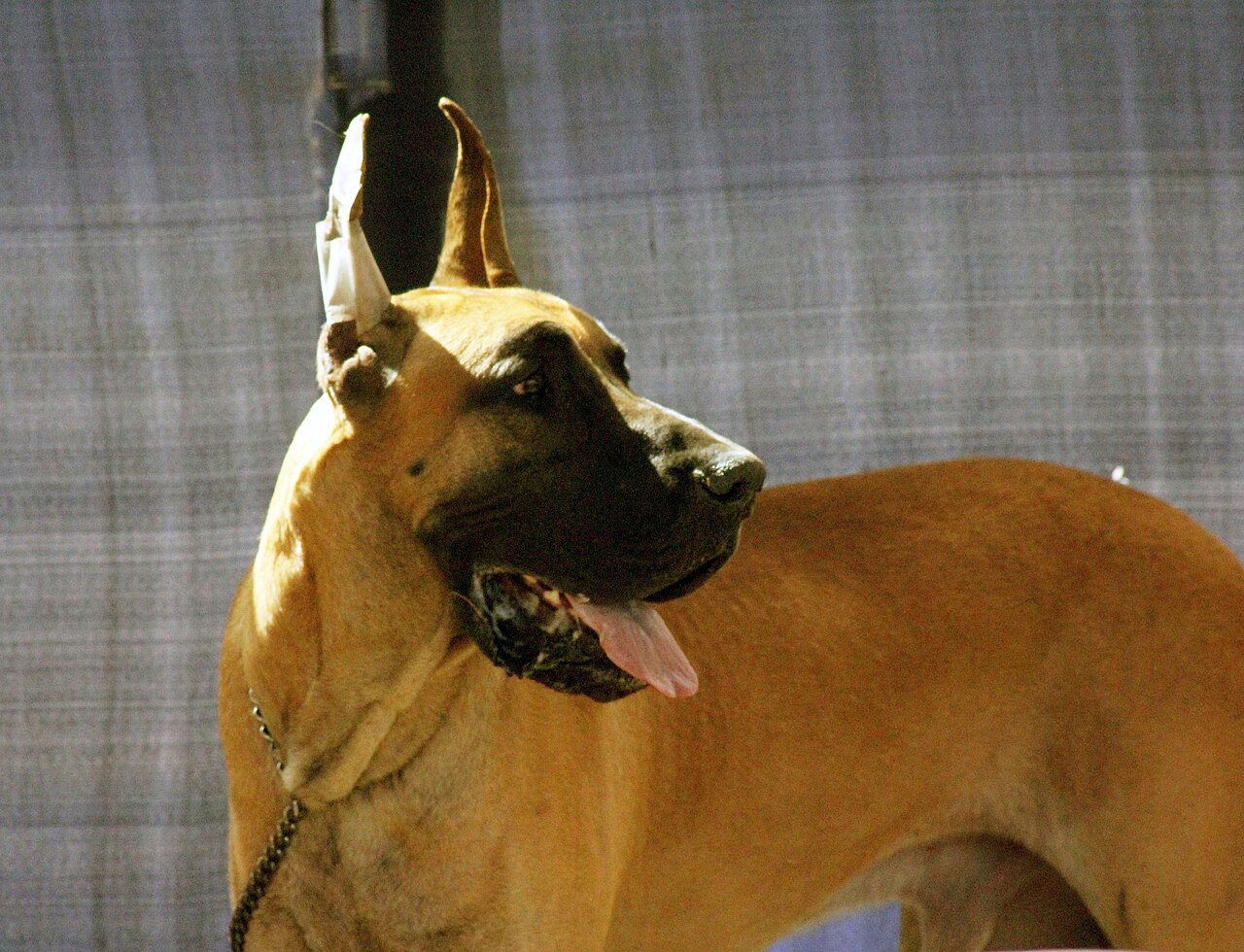
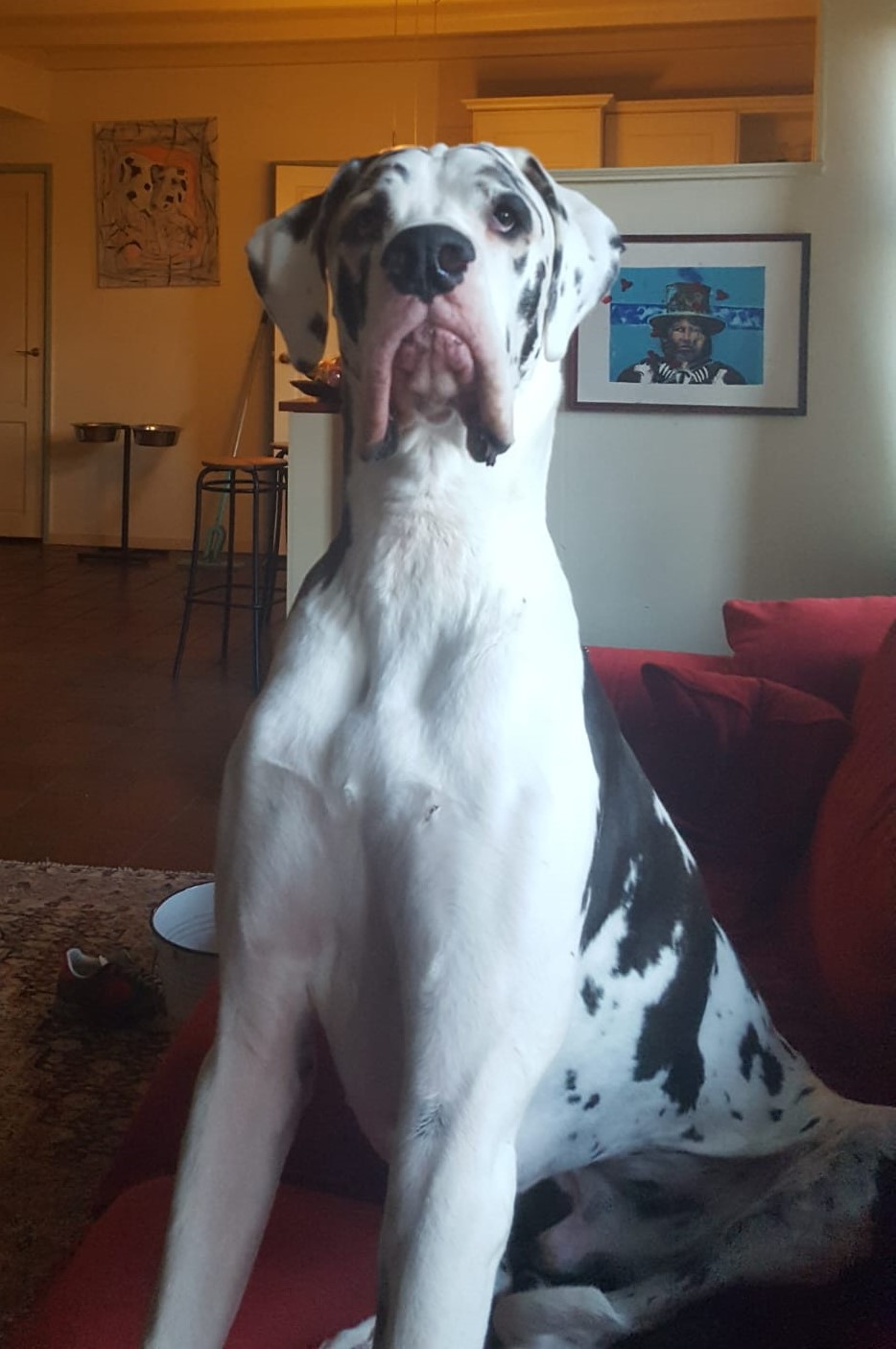
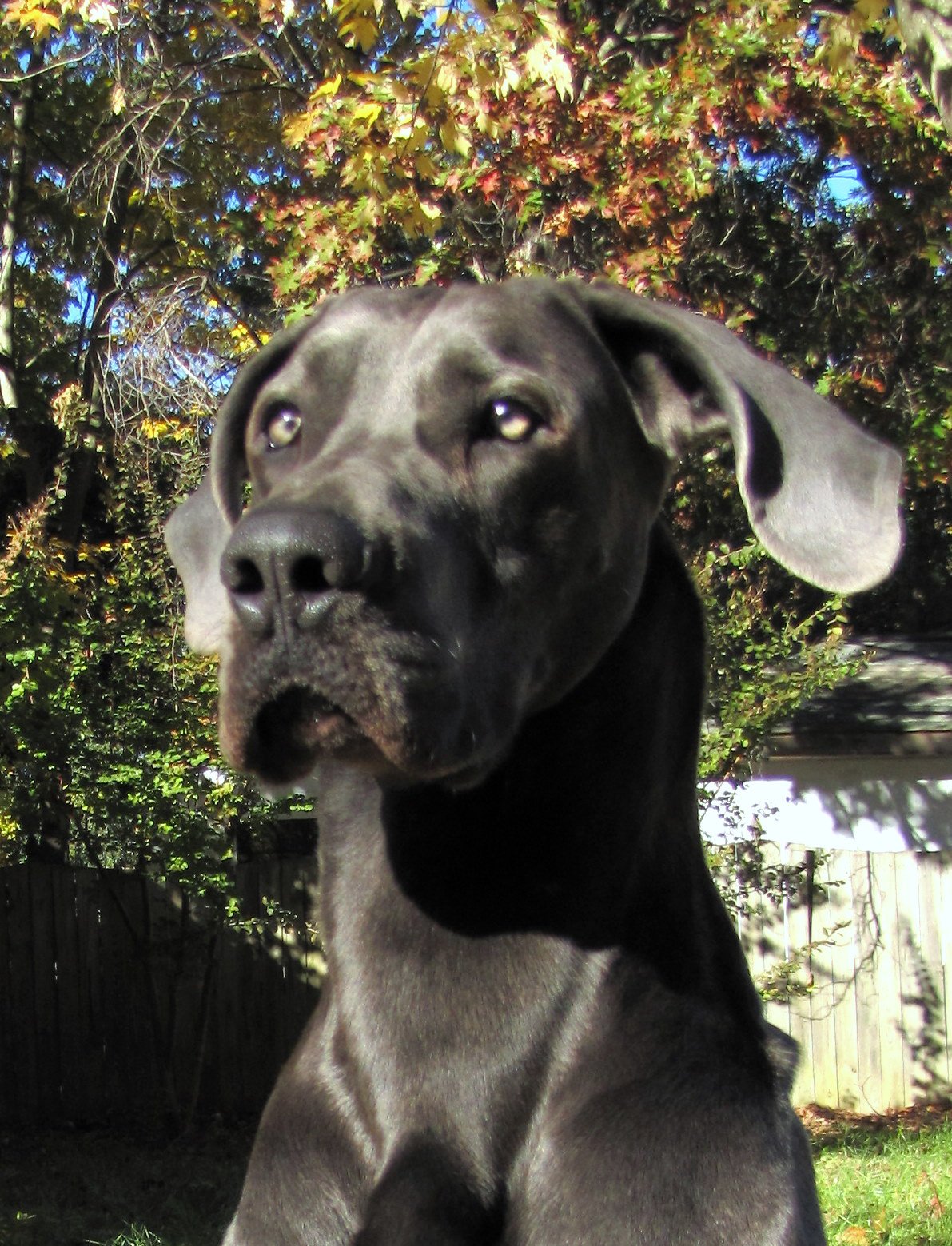
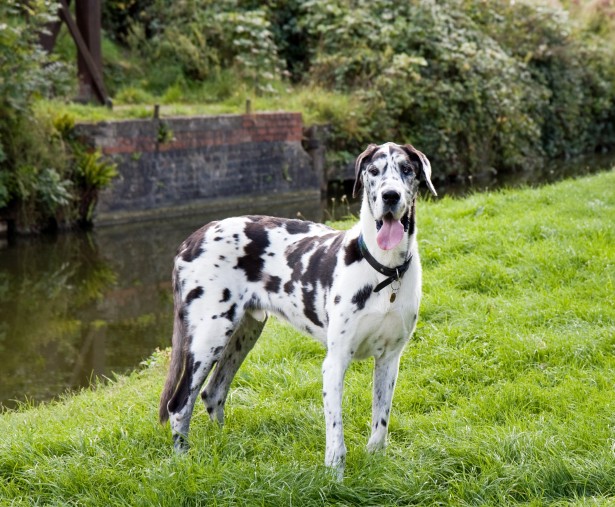
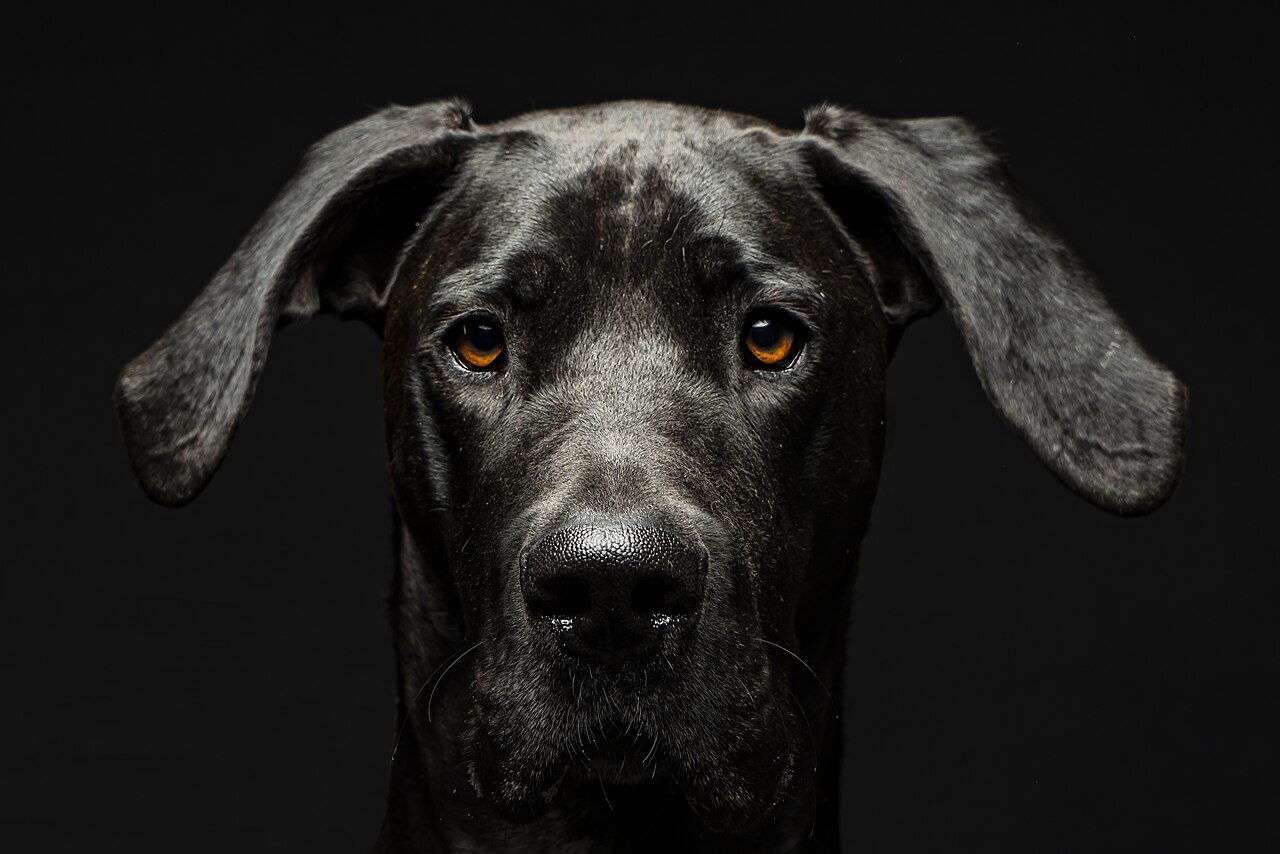
The Great Dane's coat palette is among its most visually striking features, with breed standards recognizing six to seven acceptable colors depending on the governing body. Fawn displays a yellow-gold base with a black mask, while brindle layers fawn and black in a chevron-striped pattern. Black coats should be glossy, with white markings on the chest or toes considered faults. The harlequin pattern is perhaps the most dramatic: a pure white base scattered with irregular torn black patches, where a pure white neck is preferred and patches must never resemble a blanket or a stippled effect. Grey merle, once a disqualifying fault, is now acceptable under FCI standards. Beyond color, the breed's ear history tells a story of shifting purpose. When Danes were actively used in boar hunts, cropping was practical, reducing the risk of injury. In the 1930s, post-surgery devices called Easter bonnets were fitted to make cropped ears stand upright. Today the practice persists in parts of the United States but is banned or restricted to veterinary surgeons in the UK, Ireland, Denmark, Germany, and parts of Australia and New Zealand.
Common Misconceptions (Editorial)
Many people mistakenly believe the Great Dane originated in Denmark because of its common name. In fact, the breed was developed in Germany and has no known connection to Denmark—the name is a translation of the French *Grand Danois*. Another misconception is that the "Englische Dogge" was simply an English breed imported as-is; however, these dogs were bred independently in German courts from the start of the 17th century, and the breed was later renamed "Deutsche Dogge" by a Berlin committee in 1878.
Why It Matters (Editorial)
The Great Dane endures as a symbol of both nobility and gentle companionship, its history intertwined with German royalty and statesmen like Otto von Bismarck. Its remarkable size and surprisingly gentle temperament continue to captivate the public, and record-holding individuals like Zeus remind us of the breed’s unique place in canine history.
Gallery
Frequently Asked Questions
What is a Great Dane?
The Great Dane is a German mastiff-sighthound breed that ranks among the two tallest dog breeds on Earth. It blends the powerful build of a mastiff with sighthound ancestry, giving it one of the most commanding presences in the canine world.
Where does the Great Dane come from?
The breed traces its origins to medieval Germany, where it was developed as both a hunting dog and a guardian for noble estates. German aristocracy historically kept these dogs to protect their property and accompany them on hunts.
How big is a Great Dane?
Males must stand at least 76 centimetres (30 inches) at the shoulder, while females need to reach a minimum of 71 centimetres (28 inches). Together with the Irish Wolfhound, this makes the Great Dane one of only two breeds that top the global height chart.
What was the Great Dane originally bred to do?
Medieval German hunters relied on these dogs to take down large game such as bears, wild boar, and deer. Over time the breed also became a steadfast guardian for noble households, a dual role that shaped its protective and loyal temperament.
How long do Great Danes typically live?
A 2024 UK study placed the average Great Dane lifespan at roughly 10.6 years. This is in line with what we'd expect from a dog of such enormous size, as larger breeds generally have shorter lifespans than their smaller counterparts.
More in Dog Breeds 1-22
Spotted an error? Know more?
This is a living reference — every entry is fact-audited, and reader corrections feed straight into our audit queue. Suggest an edit · See this site's audit record