
French Bulldog
A French breed of companion dog, popular but health-challenged.

via Wikipedia: French Bulldog · see source
The French Bulldog (French: Bouledogue Français) is a French breed of companion dog or toy dog. It appeared in Paris in the mid-nineteenth century, apparently the result of cross-breeding of Toy Bulldogs imported from England and local Parisian ratters. It is commonly kept as a pet and is among the most frequently registered dogs in a number of countries including Australia, the United Kingdom, and the United States. The breed is susceptible to various health problems due to being bred for its distinctive flat face and skin wrinkles.
- life expectancy (Japanese pet cemetery s
- 10.2 years
Verified Timeline
Lore & Background
From the beginning of the nineteenth century, bulldogs were bred in the United Kingdom for purposes other than traditional blood sports such as bull-baiting, which were banned in 1835. By the middle of the century there were miniature bulldogs, most weighing around 7–11 kg (15–24 lb). At the same time, lace workers from Nottingham who were displaced by the Industrial Revolution began to settle in Normandy, France. They brought a variety of dogs with them, including Toy Bulldogs. The dogs became popular in France and a trade in imported small Bulldogs was created, with breeders in England sending over Bulldogs that they considered to be too small, or with faults such as ears that stood up. By 1860, there were few Toy Bulldogs left in England, such was their popularity in France. The small Bulldog type gradually became thought of as a breed, and received a name, the Bouledogue Français. This French version of the English name is also a contraction of the words boule ('ball') and dogue ('mastiff'). The dogs were highly fashionable and were sought after by society ladies and Parisian prostitutes alike, as well as creators such as artists, writers, and fashion designers. The artists Edgar Degas and Henri de Toulouse-Lautrec are thought to have French Bulldogs in their paintings. However, records were not kept of the breed's development as it diverged further away from its original Bulldog roots. As it changed, terrier stock had been brought in to develop traits such as the breed's long straight ears.
Reader's Guide
The French Bulldog emerged in mid-nineteenth-century Paris from cross-breeding English Toy Bulldogs with local ratters. It quickly became a fashionable pet among society ladies, prostitutes, and artists, and was depicted in paintings by Edgar Degas and Henri de Toulouse-Lautrec. The breed was recognized by the American Kennel Club soon after the French Bull Dog Club of America formed in the late 1890s, and by 1906 it was the fifth most popular dog breed in America. In the United Kingdom, recognition came later, in 1905, after opposition from English Bulldog breeders. Today the French Bulldog is among the most registered dogs in Australia, the United Kingdom, and the United States; in 2023 it overtook the Labrador Retriever as the most popular breed in the United States according to the AKC. However, the breed suffers from severe health problems linked to its brachycephalic (flat-faced) conformation, including stenotic nares, brachycephalic obstructive airway syndrome, skin fold dermatitis, and dystocia. A UK study found a life expectancy of only 4.53 years, though this may be biased by the breed's rapidly increasing population. Despite these challenges, its popularity continues to rise.
Did You Know?
- The French Bulldog's name Bouledogue Français is a contraction of the French words boule ('ball') and dogue ('mastiff').
- By 1860, there were few Toy Bulldogs left in England because so many had been exported to France.
- At the 1896 Westminster Kennel Club Dog Show, judge George Raper only chose winners with 'rose ears,' prompting the formation of the French Bull Dog Club of America to favor erect 'bat ears.'
- A UK study found that French Bulldogs have a life expectancy at birth of 4.53 years, the lowest by a large margin of all breeds in the study.
- Over 80% of French Bulldog litters are delivered by Caesarean section.
From Lace Mills to Parisian Streets
The French Bulldog's story begins not in a kennel but in the upheaval of industrialization. When the Industrial Revolution displaced lace workers from Nottingham, England, many relocated to Normandy, France, carrying with them an assortment of small dogs, among them the Toy Bulldog. These compact companions quickly captured the imagination of Parisians, and a lively trade sprang up: English breeders began shipping over Bulldogs they deemed too small or carrying minor faults, such as ears that stood upright rather than folding. By 1860, the Toy Bulldog had virtually vanished from England, so eagerly had French buyers absorbed the supply. In Paris, the small Bulldog type gradually coalesced into something distinct, eventually earning the name Bouledogue Français—a contraction of boule, meaning ball, and dogue, meaning mastiff. Local Parisian ratters were reportedly crossed with the imported Toy Bulldogs, and terrier blood was later introduced to shape traits like the breed's characteristic long, straight ears. No formal records were kept during this formative period, leaving the exact lineage of the breed's divergence from its Bulldog ancestors largely a matter of inference.
Salons, Studios, and Society
Once the Bouledogue Français took root in Paris, it became far more than a household pet—it became a cultural symbol. The breed was courted by an eclectic mix of admirers: society ladies, Parisian prostitutes, artists, writers, and fashion designers all vied for ownership. Painters such as Edgar Degas and Henri de Toulouse-Lautrec are thought to have included French Bulldogs in their paintings, embedding the breed in the visual record of the era. The dog's appeal crossed the Atlantic as well. American society women first exhibited the breed at the Westminster Kennel Club Dog Show in 1896, and by the early twentieth century the French Bulldog had become a status symbol among the ultra-wealthy. Dogs changed hands for as much as three thousand dollars, and prominent families including the Rockefellers and the J. P. Morgans counted them among their household companions. The breed's social cachet was so pronounced that by 1906 it had climbed to the fifth most popular dog in America.
The Battle of the Ears and Breed Recognition
The French Bulldog's path to formal recognition was anything but smooth, and at its center lay a dispute over ears. When American society ladies first showed the breed at the 1896 Westminster Kennel Club Dog Show, judge George Raper selected only dogs with 'rose ears'—the folded-tip style of traditional Bulldogs. The exhibitors, who preferred the upright 'bat ear' look, were outraged. They organized the French Bull Dog Club of America and drafted a standard explicitly favoring erect ears. The American Kennel Club moved quickly to recognize the breed. In England, the situation was more contentious. The first French Bulldogs arrived in 1893, and English Bulldog breeders protested fiercely, fearing crossbreeding would dilute their stock. The Kennel Club initially classified the French type as a subset of the Bulldog rather than a separate breed. It was not until a founding meeting at the home of Frederick W. Cousens on 10 July 1902 that a dedicated breed club was established. Despite opposition from Miniature Bulldog and Bulldog breeders alike, the Kennel Club granted separate recognition in 1905 as the Bouledogue Français, and in 1912 the name was shortened to French Bulldog.
The Price of a Flat Face
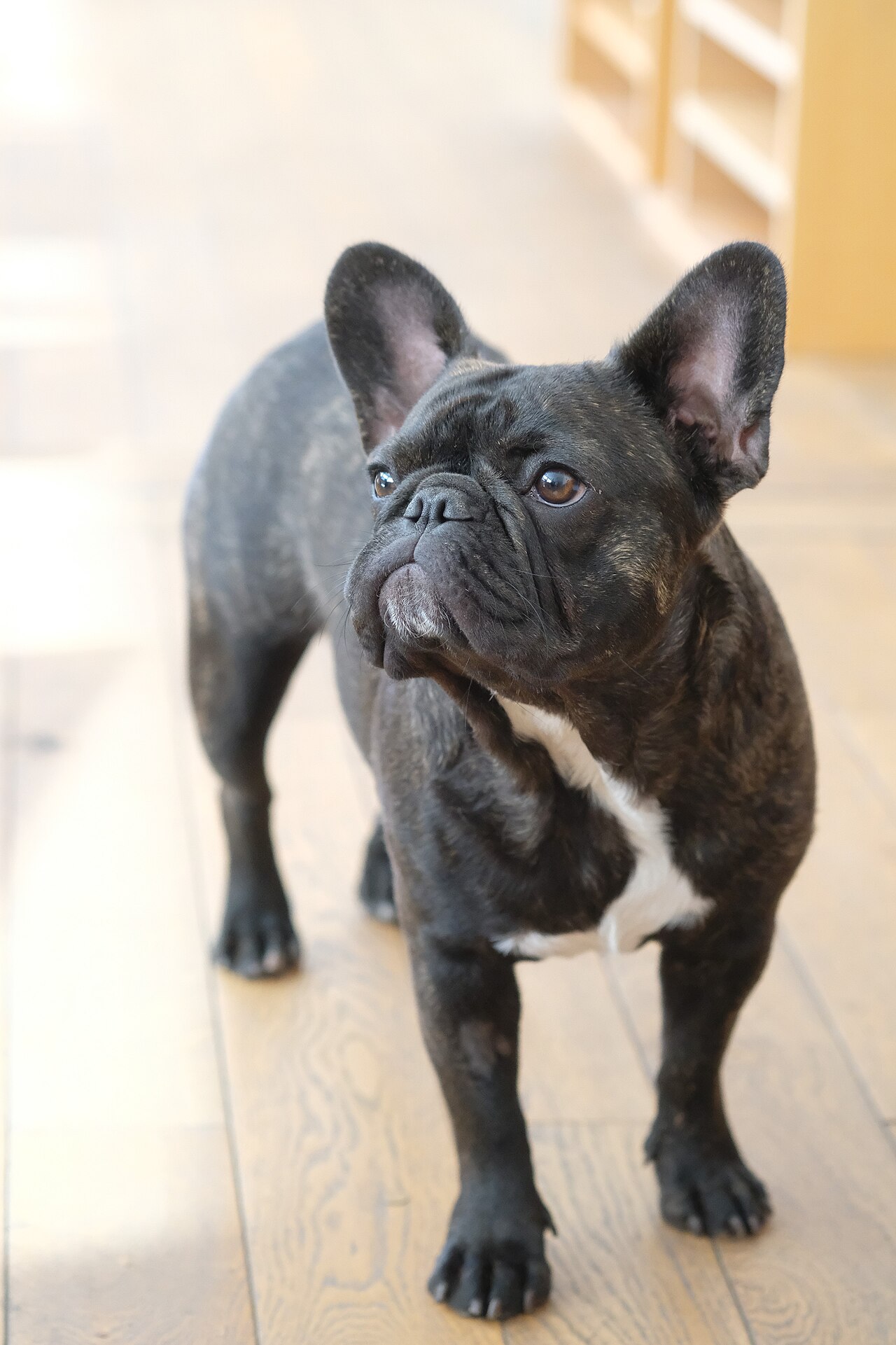
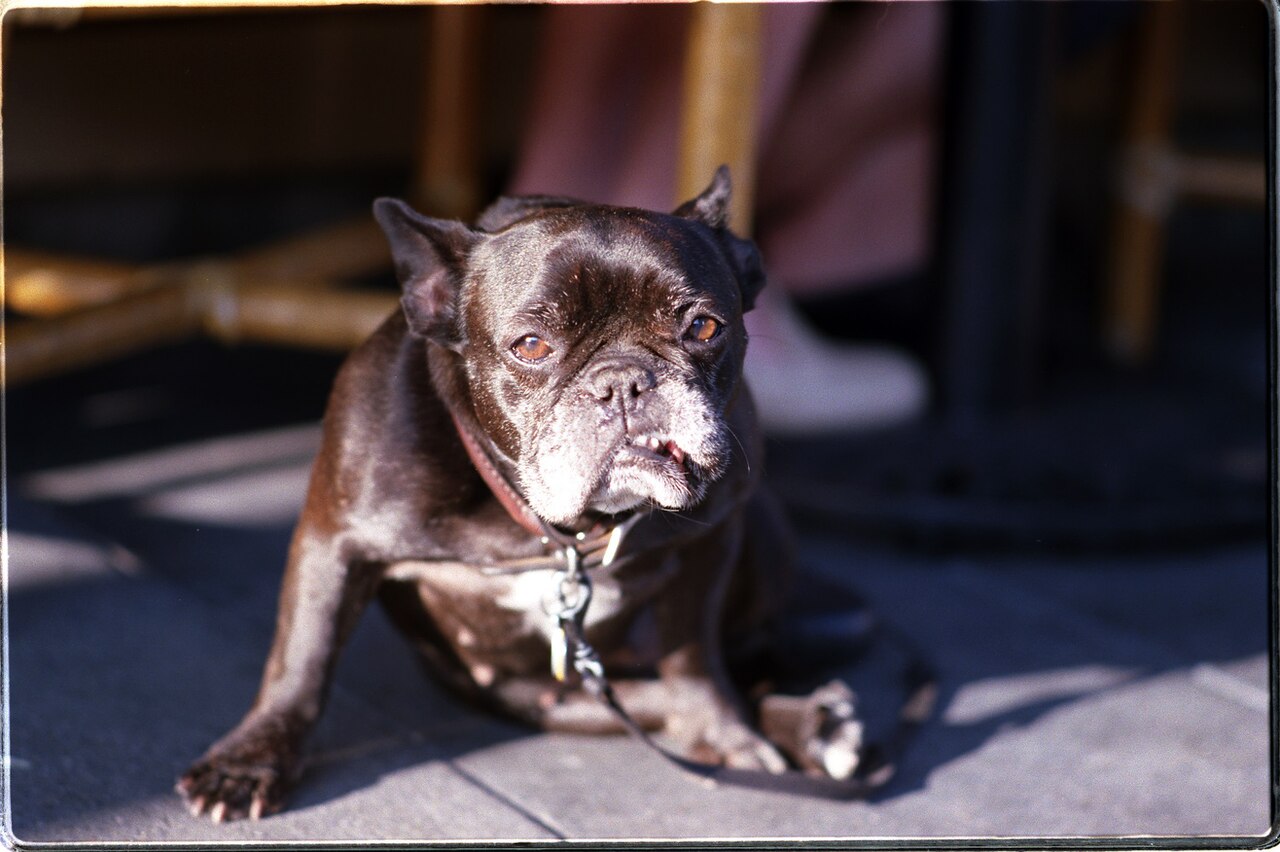
The French Bulldog's most celebrated feature—its compact, flat face—is also the source of its most serious health vulnerabilities. A UK study comparing the breed to the general canine population across 43 common conditions found that French Bulldogs showed significantly higher prevalence for nearly half of them. Stenotic nares, a narrowing of the nostrils, occurred at 42 times the rate seen in the broader dog population, while brachycephalic obstructive airway syndrome was 30 times more common. Aural discharge appeared at 14 times the general rate. These conditions are direct consequences of the breed's brachycephalic skull shape and the skin wrinkles that define its appearance. The American Kennel Club standard calls for a muscular dog with a soft, loose coat forming wrinkles, a square and large head, bat-like erect ears, and dark—nearly black—eyes. Blue-eyed individuals are not approved under the standard. The coat should be short, fine, and silky, in shades of brindle, fawn, cream, or white with brindle patches known as pied. The breed's maximum weight is 28 pounds, and its distinctive look, while iconic, carries a measurable cost in respiratory and ear health.
Common Misconceptions (Editorial)
- Some people may assume that the French Bulldog’s flat face is a harmless cosmetic trait, but the facts confirm it is linked to health problems, as the breed is susceptible to various issues due to being bred for that distinctive look. - It is sometimes thought that the French Bulldog originated in France from native breeds, but the facts show it appeared in Paris in the mid-nineteenth century as a result of cross-breeding Toy Bulldogs imported from England with local Parisian ratters. - A common misconception is that the breed has a typical canine life expectancy of 8–12 years; however, a UK study found French Bulldogs have a life expectancy at birth of only 4.53 years, the lowest among all breeds studied.
Why It Matters (Editorial)
The French Bulldog endures as a beloved companion not despite its quirks but because of them—its bat ears, compact size, and affectionate nature have made it a cultural icon from Parisian brothels to modern suburban homes. Yet its popularity comes with a moral weight: breeding for extreme features has led to heartbreakingly short lifespans and near-universal cesarean deliveries, reminding us that our affection for a breed must contend with the costs we impose on the animal itself.
Gallery




Frequently Asked Questions
What is a French Bulldog?
The French Bulldog is a small toy-breed companion dog that originated in Paris during the late 1800s. It is one of the most popular registered breeds in the United States, the United Kingdom, and Australia.
Where did the French Bulldog come from?
The breed emerged in Paris between roughly the 1860s and 1880s, most likely from crosses between English Toy Bulldogs and local Parisian ratters. Its French name, Bouledogue Français, reflects that Parisian origin.
What health problems are French Bulldogs known for?
Because the breed was selectively shaped for its signature flat face and heavy skin wrinkles, it is susceptible to a range of medical issues. These brachycephalic traits can lead to breathing difficulties and other complications that owners must actively manage.
Why is the French Bulldog so popular?
Its compact build, affectionate and playful temperament, and striking bat-eared look make it a favorite apartment companion. That combination of personality and appearance keeps it near the top of registration lists in several major countries.
What makes the French Bulldog's appearance distinctive?
The breed is instantly recognizable by its broad, flat muzzle, deep facial wrinkles, and large upright ears. These features were the specific targets of 19th-century selective breeding and set it apart from other small companion dogs.
More in Dog Breeds 1-22
Spotted an error? Know more?
This is a living reference — every entry is fact-audited, and reader corrections feed straight into our audit queue. Suggest an edit · See this site's audit record