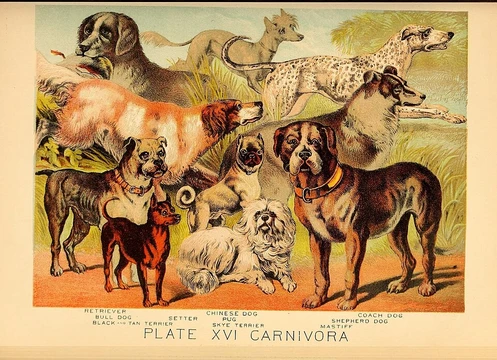
Boxer
A medium-to-large mastiff-type breed developed in Germany.

The Boxer is a medium to large, short-haired dog breed of mastiff-type, developed in Germany. It was bred from the Old English Bulldog and the now extinct Bullenbeisser. The Boxer is a member of both The Kennel Club and American Kennel Club (AKC) Working Group.
- breed_group
- Working Group (AKC, The Kennel Club)
- country_of_origin
- Germany
- coat
- Smooth, tight-fitting; fawn or brindled, with or without white markings
- distinctive_feature
- Brachycephalic skull, square muzzle, underbite, powerful bite
- popularity
- Seventh-most popular in the US (2013); 11th-most popular (later AKC data)
Lore & Background
The Boxer was developed in Germany in the late 19th century from the now extinct Bullenbeisser, a dog of English Mastiff descent, and Bulldogs brought in from Great Britain. Bernards in Munich the next year. The breed was originally docked and cropped, but cropping and docking have been prohibited in some countries; the UK Kennel Club does not recognize cropped ears or docked tails, while the AKC still permits cropped ears.
Reader's Guide
The Boxer is a hunting mastiff developed in Germany in the late 19th century. Its distinctive head features a broad, short skull, square muzzle, and underbite, with a powerful bite ideal for holding large prey. The breed is known for its loyalty, intelligence, and protective nature, making it a popular family dog. Boxers are bright, energetic, and playful, generally good with children, but require proper socialization and exercise. They respond better to positive reinforcement training than correction-based methods. The breed's popularity in the United States has fluctuated, ranking seventh in 2013 and later 11th. White Boxers, which are not albino, make up about 20–25% of births and have a higher risk of sunburn and deafness. Historically, many white puppies were euthanized, but breeders increasingly place them in pet homes. The Boxer does not carry the gene for a solid black coat; so-called black Boxers are heavily brindled.
Did You Know?
- The Boxer was bred from the Old English Bulldog and the now extinct Bullenbeisser.
- About 20–25% of all Boxers born are white, and an estimated 18% of white Boxers are deaf in one or both ears.
- The Boxer does not carry the gene for a solid black coat; purebred black Boxers do not exist.
Common Misconceptions (Editorial)
Some people believe that Boxers come in a solid black coat, but the facts confirm that the Boxer does not carry the gene for a solid black coat, and purebred black Boxers do not exist. Others may assume the breed’s cropped ears and docked tail are standard worldwide, but the UK Kennel Club does not recognize cropped ears or docked tails, while the AKC still permits them—showing that these practices are not universal.
Why It Matters (Editorial)
The Boxer endures as a beloved breed because it combines a striking, powerful appearance with a loyal and energetic temperament, making it a popular choice for families and working roles alike. Its continued high ranking in U.S. popularity—seventh-most popular in 2013 and 11th in later data—reflects a lasting connection with owners who value both its history as a German working dog and its distinctive, brachycephalic look.
Frequently Asked Questions
What is a Boxer?
The Boxer is a medium-to-large, short-coated mastiff-type dog that was developed in Germany. It's recognized for its energetic temperament and powerful, athletic build.
What breeds were used to create the Boxer?
The Boxer was bred from two ancestral lines: the Old English Bulldog and the Bullenbeisser, a now-extinct German hunting dog.
What does a Boxer look like?
Boxers carry a smooth, tight-fitting coat in fawn or brindled shades, often with white markings. Their head features a brachycephalic skull, a square muzzle, and a characteristic underbite that contributes to a very powerful bite.
Which breed group is the Boxer classified under?
Both the American Kennel Club and The Kennel Club place the Boxer in the Working Group.
How popular is the Boxer in the United States?
The Boxer has consistently been a top-ranked breed in the US, sitting at seventh in AKC popularity in 2013 and eleventh in later AKC data.
More in Dog Breeds 1-22
Spotted an error? Know more?
This is a living reference — every entry is fact-audited, and reader corrections feed straight into our audit queue. Suggest an edit · See this site's audit record