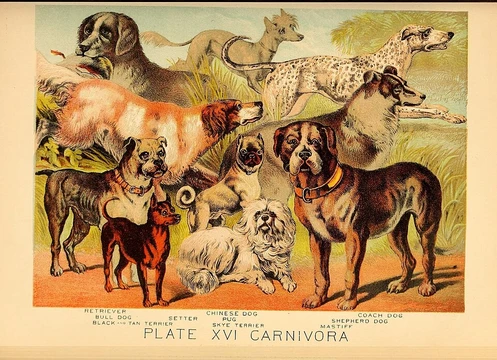
St. Bernard
Gentle giant bred for Alpine rescue work.

via Wikipedia: St. Bernard (dog breed) · see source
The St. Bernard is a breed of very large working dog from the Western Alps, originally bred for rescue work by the hospice of the Great St Bernard Pass on the Italian-Swiss border. Switzerland is recognized as its country of origin by the FCI. The hospice, built by and named after the Alpine monk Saint Bernard of Menthon, acquired its first dogs between 1660 and 1670. The breed became famous through tales of Alpine rescues, as well as for its large size and gentle temperament.
- field
- Working dog, rescue
- nationality
- Swiss
- known_for
- Alpine rescues, large size, gentle temperament
- life_expectancy
- 9.3 years (2024 UK study)
Verified Timeline
Lore & Background
The earliest written records of the St. Bernard are from monks at the Great St Bernard Hospice in 1707, with paintings dating to 1690 by Italian artist Salvator Rosa. The most famous St. Bernard to save people at the pass was Barry, who reportedly saved somewhere between 40 and 100 lives. There is a monument to Barry in the Cimetière des Chiens, and his body was preserved in the Natural History Museum in Bern. Another famous dog was Rutor, the faithful companion of the Italian priest Pierre Chanoux, named after the peak Tête du Rutor above the Little St. Bernard pass. Severe winters from 1816 to 1818 led to increased numbers of avalanches, killing many of the dogs used for breeding while they were performing rescues. In an attempt to preserve the breed, the remaining St. Bernards were crossed with Newfoundlands brought from the Colony of Newfoundland in the 1850s, as well as with other breeds. This led to a significant change in their appearance and abilities; the long fur they inherited would freeze in the snowy climate of the Alps, weighing them down and reducing their effectiveness as rescue dogs. The dogs never received any special training from the monks; instead, younger dogs would learn how to perform search and rescue operations from older dogs. The Swiss St. Bernard Club was founded in Basel on 15 March 1884. The St. Bernard was the first breed entered into the Swiss Stud Book in 1884, and the breed standard was finally approved in 1888. Since then, the breed has been a Swiss national dog. During World War I St. Bernard dogs assisted the Red Cross and were used to carry supplies to troops in the Italian mountains, stationed in places inaccessible to mules and horses. The dogs at the Great St Bernard Hospice were working dogs that were smaller than today's show St. Bernards; originally about the size of a German Shepherd Dog, the St. Bernard grew to the size of today's dog as kennel clubs and dog shows emphasized appearance over the dog's working ability, along with a closed stud book.
Reader's Guide
The St. Bernard's significance lies in its historical role as a rescue dog in the treacherous Alpine passes, particularly the Great St Bernard Pass. The hospice, built by and named after Saint Bernard of Menthon, used these dogs for centuries to locate and aid travelers lost in snow and avalanches. The breed's fame was cemented by tales of Barry, who reportedly saved between 40 and 100 lives. However, the modern St. Bernard is radically different from the original dogs kept at the Great St Bernard Hospice, most notably by being much larger in size and build. Since the late 1800s, the breed has been refined using many different large molosser-type breeds, including the Newfoundland, Great Pyrenees, Greater Swiss Mountain Dog, Great Dane, English Mastiff, and possibly the Tibetan Mastiff and Caucasian Shepherd Dog. This crossbreeding, along with later emphasis on show appearance, led to a larger dog with long fur that proved less practical for Alpine rescues. The last recorded Alpine rescue by a St. Bernard was in 1955. Despite no longer being used for rescues, the Great St Bernard Hospice still retained 18 of the dogs as of 2004 for reasons of tradition and sentiment. The breed is recognized internationally by the Fédération Cynologique Internationale as a Molosser in Group 2, Section 2, and by major kennel clubs including The Kennel Club (UK), the Canadian Kennel Club, and the American Kennel Club in the Working Dog group. Health concerns include a 2024 UK study finding a life expectancy of 9.3 years, predisposition to osteosarcoma, dilated cardiomyopathy, hip dysplasia (14.70% of dogs in one study), and gastric dilatation volvulus (with an odds-ratio of 4.2).
Did You Know?
- The hospice acquired its first dogs between 1660 and 1670.
- The most famous St. Bernard, Barry, reportedly saved between 40 and 100 lives.
- The last recorded Alpine rescue by a St. Bernard was in 1955.
- The dogs at the hospice were originally about the size of a German Shepherd Dog.
- The breed was the first entered into the Swiss Stud Book in 1884.
Common Misconceptions (Editorial)
1. A common misconception is that St. Bernards carried small barrels of brandy around their necks during rescues. While romanticized in popular culture, this is not supported by the historical record on the breed. 2. Many believe St. Bernards were always as large as they are today. In fact, the dogs kept at the Great St Bernard Hospice were originally about the size of a German Shepherd Dog, and only grew to today's massive size after kennel clubs and dog shows emphasized appearance over working ability.
Why It Matters (Editorial)
The St. Bernard endures as a symbol of selfless heroism, not just because of its legendary rescues in the Alps, but because its story reflects a deeper human yearning for loyalty and protection in the face of nature's harshest trials. Its journey from a practical working dog to a beloved companion reminds us that even as breeds change to suit human ideals, the bond between people and dogs remains steadfast.
Frequently Asked Questions
What is a St. Bernard?
The St. Bernard is a very large working dog that originated in the Western Alps. It was purpose-bred to carry out rescue duties at the Great St Bernard Pass hospice, which sits on the Italian-Swiss border.
Where does the St. Bernard come from?
The FCI lists Switzerland as the breed's country of origin. The dogs were developed specifically for mountain rescue at the Great St Bernard Pass.
What are St. Bernards famous for?
Three things stand out: their legendary Alpine rescue stories, their enormous size, and their surprisingly gentle, friendly nature.
How long do St. Bernards typically live?
A 2024 UK study pegs the average lifespan at roughly 9.3 years. That shorter span is typical for a breed of their massive build.
What's a St. Bernard's personality like?
They're the classic gentle giant — calm, patient, and remarkably friendly despite their towering size. That laid-back temperament is what made them so well suited to careful mountain rescue work.
More in Dog Breeds 1-22
Spotted an error? Know more?
This is a living reference — every entry is fact-audited, and reader corrections feed straight into our audit queue. Suggest an edit · See this site's audit record